


How to Choose a Men's Leather Belt? Size, Measurement and Style Guide
Quick answer: When choosing a men's leather belt, consider more than colour and design. Belt size, actual length, width, trouser belt loops, intended use, leather type and buckle construction should all be evaluated together. A belt designed for formal trousers does not necessarily need to have the same construction as one intended for jeans or casual trousers.
Especially when shopping online, one of the most important steps is to check the product's sizing and measurement method and, where possible, compare it with a belt you already wear comfortably.

A men's leather belt is both a functional accessory and a visible part of an everyday outfit. However, choosing the right belt involves more than deciding on a preferred colour or buckle design.
If the belt size is incorrect, if its width does not fit the trouser loops or if its construction is unsuitable for the intended use, even an attractive belt may not perform as expected in everyday wear.
For this reason, when choosing a men's leather belt, it is better to start with size and intended use, then evaluate the leather, width, buckle and design details.
What Should You Consider When Choosing a Men's Leather Belt?

The main selection criteria should be considered together:
| Criterion | What to Check | Why It Matters |
|---|---|---|
| Size | The product's own sizing system | Helps the belt fasten at the appropriate point |
| Length | Actual measurement between the buckle and holes | Prevents choosing only by total belt length |
| Width | Trouser belt-loop dimensions | Ensures physical compatibility with the trousers |
| Use | Formal, everyday or casual | Influences style and width selection |
| Leather | Actual material information for the product | Helps explain the belt's construction and wearing characteristics |
| Buckle | Size, attachment and ease of use | Affects both appearance and everyday function |
How Do You Choose the Right Men's Belt Size?
One of the most common mistakes when buying a belt is assuming that there is one universal belt size for every brand and model based solely on trouser size.
In reality, the way belt sizes are defined can vary according to the product and the manufacturer's measurement method. Some measurements may run from the buckle to a particular hole, while others may use different reference points.
For this reason, it is safer to use the size chart and measurement method provided for the specific product.
Measuring a Belt You Already Own
If you already have a belt that fits comfortably, it can provide a useful reference when choosing a new one.
Identify the hole you use most frequently. Then measure from the starting point specified by the new belt's manufacturer to that hole, and compare the result with the new product's size chart.
The important point is not to assume that every belt is measured from exactly the same location. Always follow the measurement instructions for the new product.
Are Total Belt Length and Belt Size the Same Thing?
Not always.
The total end-to-end length of a belt may be different from the measurement used to define its wearable size.
Buckle construction, hole positions and the manufacturer's sizing system can all create differences between these measurements.
For this reason, instead of relying only on a figure such as “110 cm belt”, check exactly what that measurement represents.
How Should You Choose Men's Leather Belt Width?
Belt width affects both appearance and compatibility with different types of trousers.
Belts with cleaner and more restrained proportions can generally work well with formal trousers, while wider and more pronounced designs may be considered for jeans and casual trousers.
However, there is no single width rule that applies to every formal or casual belt.
The safest approach is to compare the actual width of the belt with the belt loops of the trousers you intend to wear.
What Is the Difference Between a Formal and a Casual Belt?

Formal and casual belts do not differ only in colour. Their surface, width, buckle, stitching and overall construction may also be different.
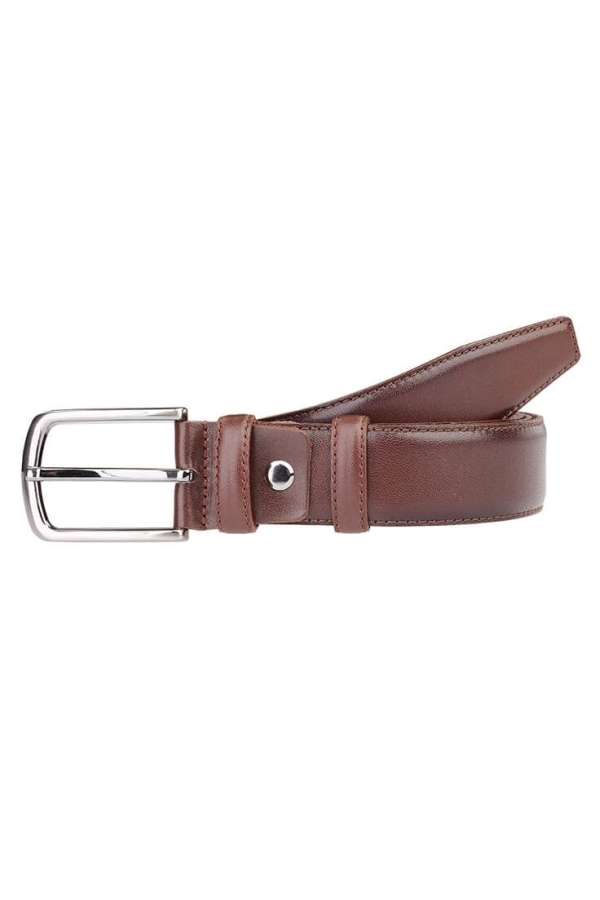
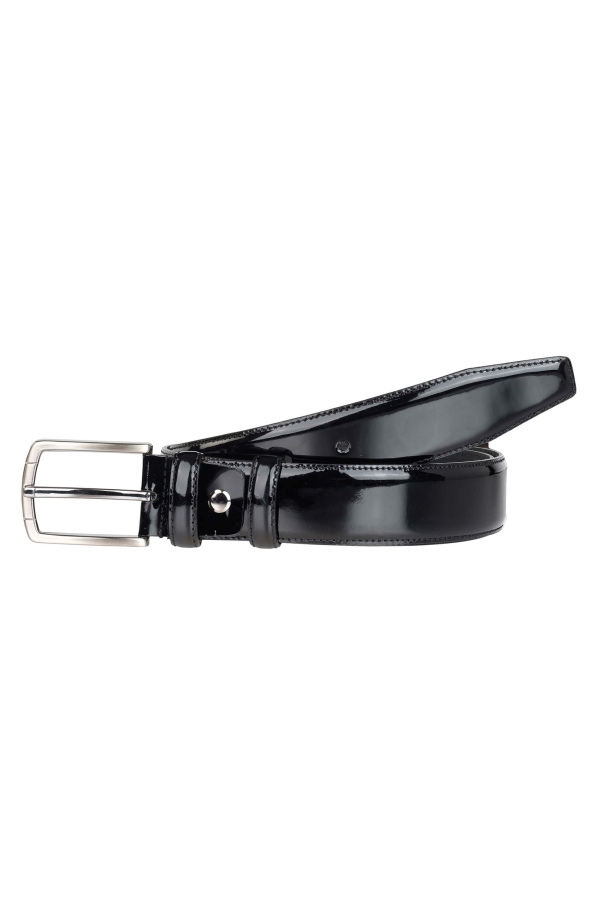
Classic Men's Leather Belt
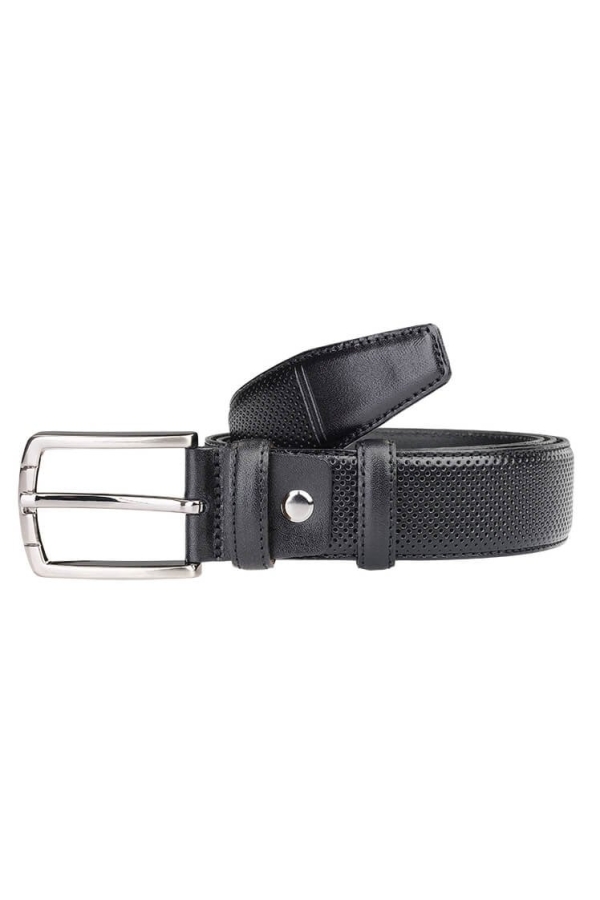
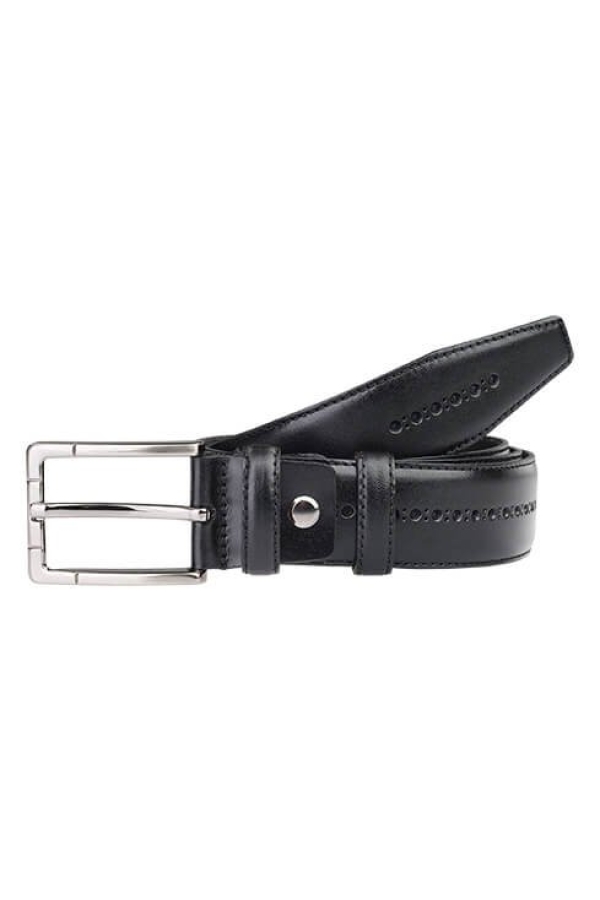
Classic belts may feature cleaner surfaces, more restrained proportions and simpler buckle designs.
These more understated styles can be considered for suits, formal trousers and office outfits.
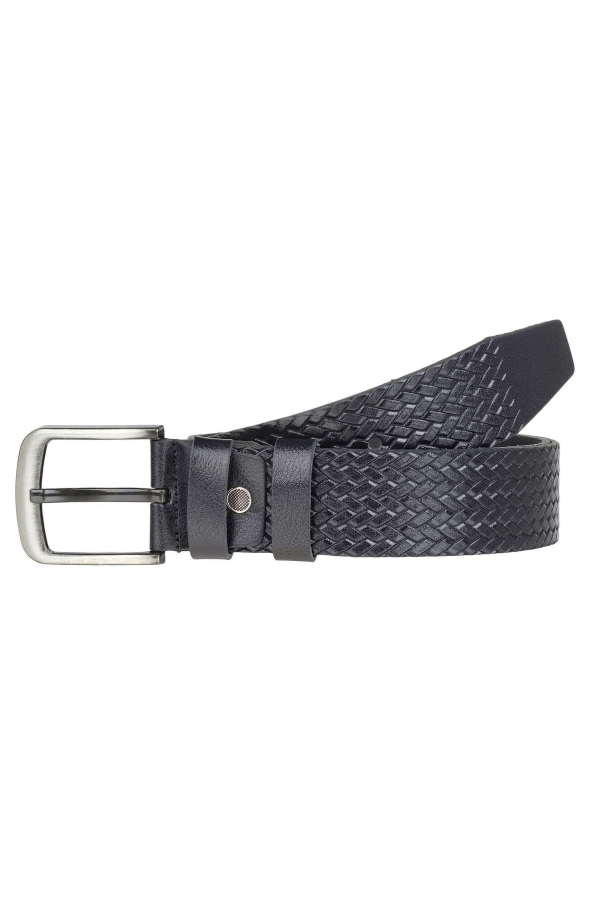
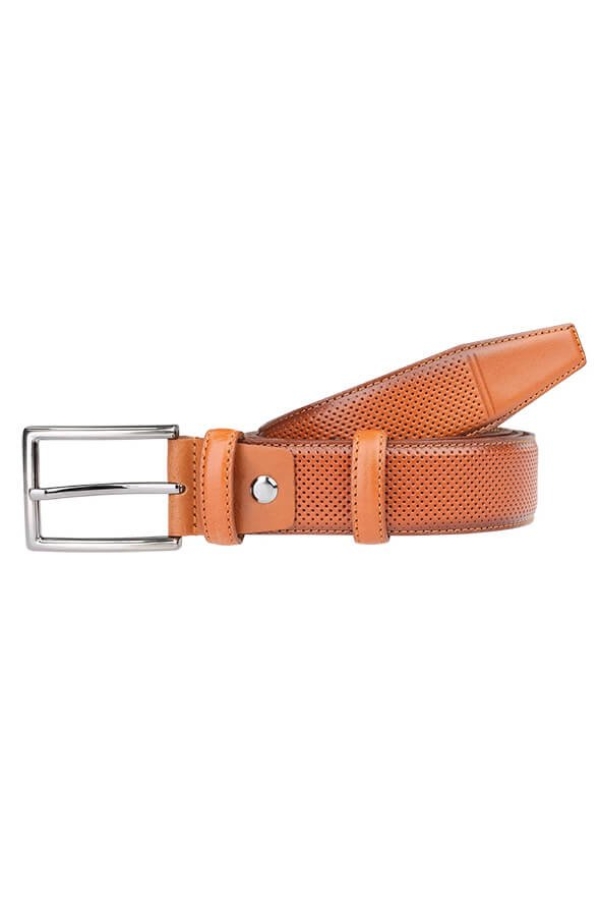
Casual Men's Leather Belt
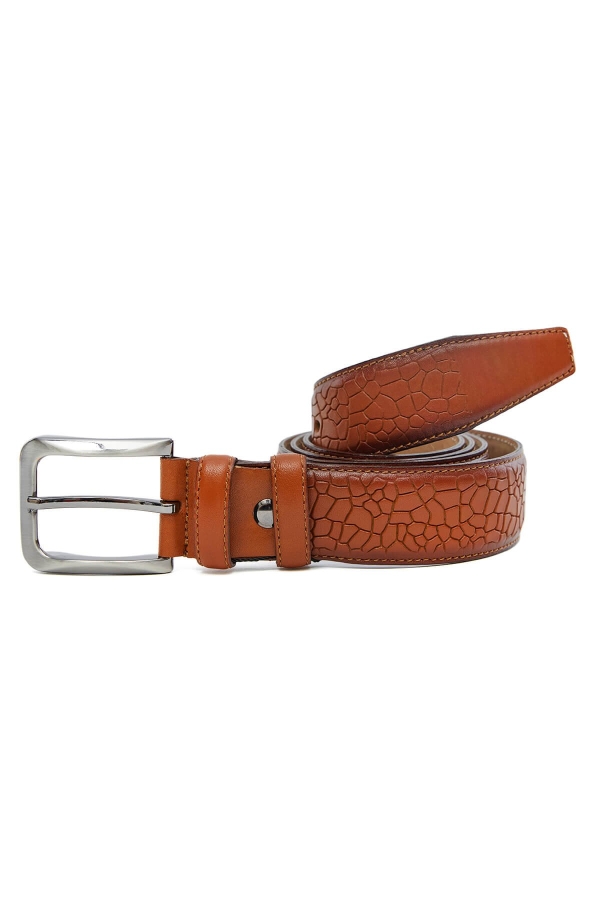
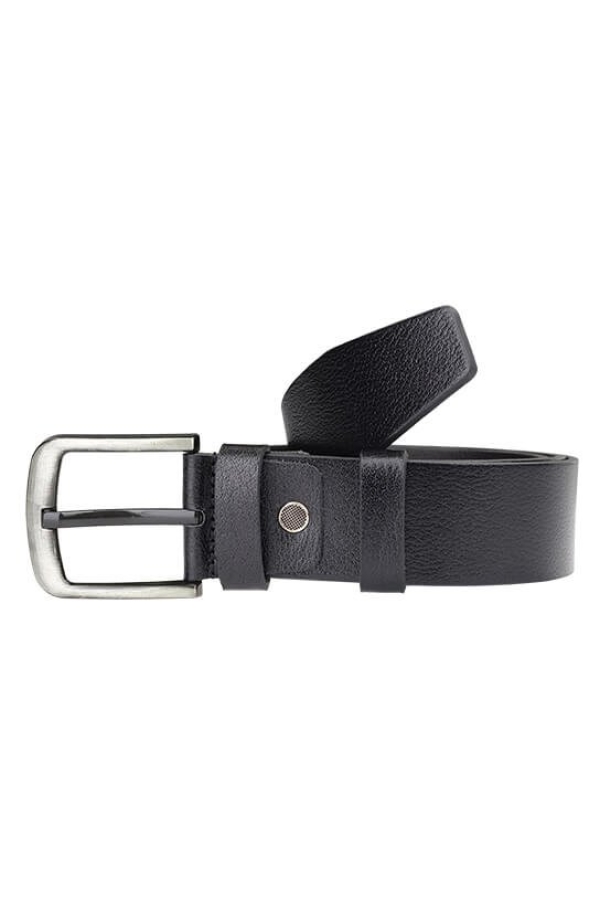
Casual belts may feature more visible leather texture, embossing, stitching details and more prominent buckle designs.
These styles can be considered for jeans, chinos and other everyday trousers.
How Should Genuine Leather Be Evaluated in a Belt?
Trying to identify genuine leather with certainty from smell, softness or one surface characteristic alone is not reliable.
Material information, the manufacturer's declaration, surface and cross-sectional characteristics and the overall construction should be considered together.
In addition, “genuine leather” is not a detailed quality grade by itself. It is important material information, but it does not alone determine the overall quality of a belt.
Bovine Leather or Buffalo Leather?
Different leather types can be used in belt production according to the intended appearance and construction of the model.
Deriza may use bovine leather in classic and selected men's belt models, while buffalo leather may be used in certain casual or sport belt designs.
However, general statements such as “bovine leather is always better” or “buffalo leather is always more durable” would be misleading.
Along with leather type, selection, thickness, tanning, fatliquoring, finishing and belt construction all influence the characteristics of the finished product.
Leather Engineer's Note: Belt Quality Is Not Determined by One Feature
When evaluating a leather belt, checking only whether the leather is genuine is not enough.
Leather type and thickness, surface finish, layering or overall construction, edge finishing, stitching, buckle attachment and general workmanship should be evaluated together.
Two belts made from the same type of leather may have different wearing characteristics because of differences in construction and production methods.
What Should You Check When Choosing a Belt Buckle?
A buckle is not only decorative; it is also part of the belt's everyday fastening mechanism.
Consider:
- How the buckle is attached to the belt body
- How smoothly the fastening mechanism operates
- The condition and finish of the buckle surface
- Whether its size suits the overall belt construction
- Whether it is comfortable in everyday use
Rather than assuming that every buckle is “stainless”, check the actual hardware and material information provided for the specific product.
How Should You Choose a Belt Colour?
Black, brown, tan, navy and burgundy leather belts can be combined with different shoes and trousers.
However, colour selection is a separate consideration. When choosing a men's leather belt, it is more important first to determine the correct size, width and intended use.
In formal dressing, a belt and shoes from a similar colour family can create a more coordinated appearance. In casual outfits, this approach can be more flexible.
How Should a Men's Leather Belt Be Cared For?

The appropriate care method for a leather belt can vary according to the type of leather and its surface finish.
For this reason, fixed rules such as “wipe with a damp cloth every week” or “always apply leather cream at regular intervals” should not be applied to every belt.
- Do not leave the belt near intense heat sources for long periods.
- If it becomes wet, do not dry it with direct high heat; allow it to dry naturally.
- Do not apply random oils, creams or household products.
- If a care product is used, choose one suitable for the leather and finish.
- Test a new care product first on a small, inconspicuous area.
- Avoid storing the belt sharply folded for long periods.
Online Men's Leather Belt Buying Checklist
Frequently Asked Questions About Choosing a Men's Leather Belt
How do you determine men's belt size?
The safest method is to use the size chart and measurement method provided for the specific product. If possible, compare it with the measurement to the hole you use most frequently on a belt that already fits comfortably.
Can you choose a belt based on trouser size?
Trouser size can provide a useful reference, but it should not be the only criterion. Because belt sizing methods can vary between brands and models, the actual product size chart should be used.
Is total belt length the same as belt size?
Not always. Total end-to-end length and the measurement used to define belt size may be different. Always check the product's measurement explanation.
What is the difference between a classic men's belt and a casual belt?
Classic styles generally have cleaner surfaces and simpler buckle designs, while casual belts may use more visible textures, stitching, embossing and different widths. Exact characteristics vary by model.
Can you identify genuine leather by smell?
Smell alone is not a reliable verification method. Material information, product specifications, surface characteristics and cross-sectional structure should be considered together.
Is bovine leather or buffalo leather better for a belt?
There is no universal ranking based only on leather type. Leather selection, thickness, tanning, fatliquoring, finishing and overall belt construction should be considered together.
Conclusion: Choosing the Right Men's Leather Belt Starts with Size
Colour and appearance are important when choosing a men's leather belt, but correct size, length, width and compatibility with the trousers are more fundamental for everyday use.
After these points are established, leather type, buckle, surface, stitching and design details can be evaluated to select a model suited to the intended use.
The right belt is one with dimensions and construction that suit your body, your trousers and the way you plan to use it.
Choose the Men's Leather Belt That Fits Your Needs
Once you know your size and intended use, compare classic and casual belt designs according to their measurements, leather, buckle and construction details.

.jpg&w=256&q=75)

.jpg&w=256&q=75)