
Card holder or wallet? The short answer
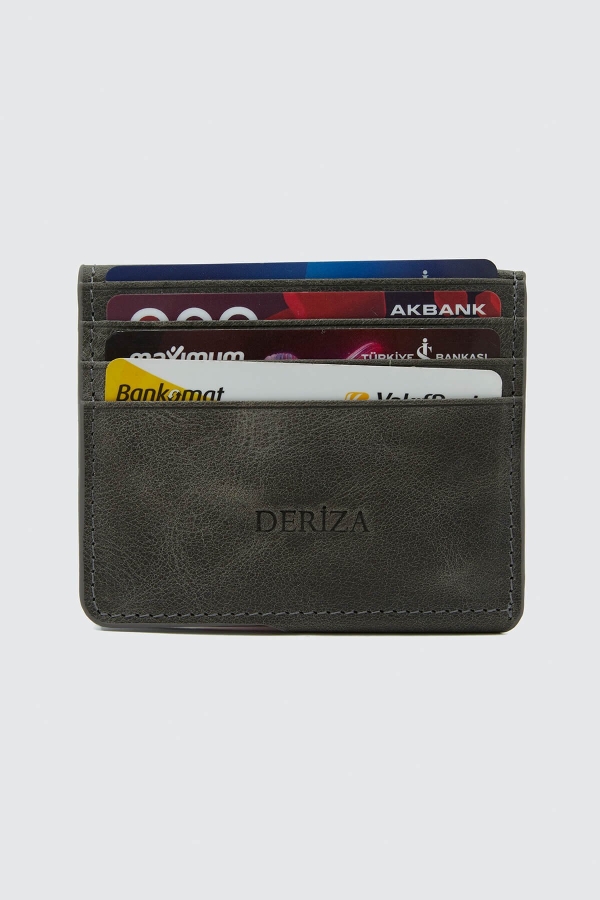
A card holder may suit you if you mainly pay by card, carry little cash and do not use coins. A wallet may be more practical if you want separate spaces for cards, banknotes, coins or small documents. The right choice depends on what you carry, the compartment layout and how the product works when filled.
Carrying few cards does not automatically mean choosing a card holder, and carrying many does not automatically mean choosing a large wallet. How often you use cash, how you access your cards and whether you carry it in a pocket or bag also matter.
The main differences between a card holder and a wallet
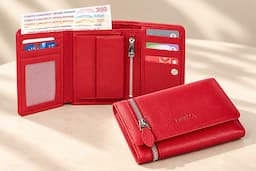
A card holder focuses on organising cards; some models also provide space for banknotes. Depending on its design, a wallet may offer separate compartments for cards, notes, coins and documents. These formats overlap: card holders with cash storage and very compact wallets both exist.
| Consideration | Card holder | Wallet |
|---|---|---|
| Main purpose | Compact, card-focused carry | Separating cards, cash and other essentials |
| Card capacity | Depends on the slots or chamber and the model’s stated capacity. | Depends on the compartment layout and the model’s stated capacity. |
| Banknotes | Possible where suitable cash storage is provided; folding may be necessary. | May have a separate note compartment; check usable internal dimensions. |
| Coins | Requires a dedicated compartment designed for coins. | Choose a model with a coin pocket; not every wallet has one. |
| Pocket carry | Assess external dimensions, filled thickness and any rigid casing together. | Assess external dimensions, filled thickness, folds and closure together. |
| Card access | Depends on external slots, covers or the mechanism. | Depends on how it opens and where the card compartments sit. |
Not every card holder is thinner than every wallet, and not every wallet holds more cards. Compare the actual specifications of the models you are considering.
Which works better for cash and coins?
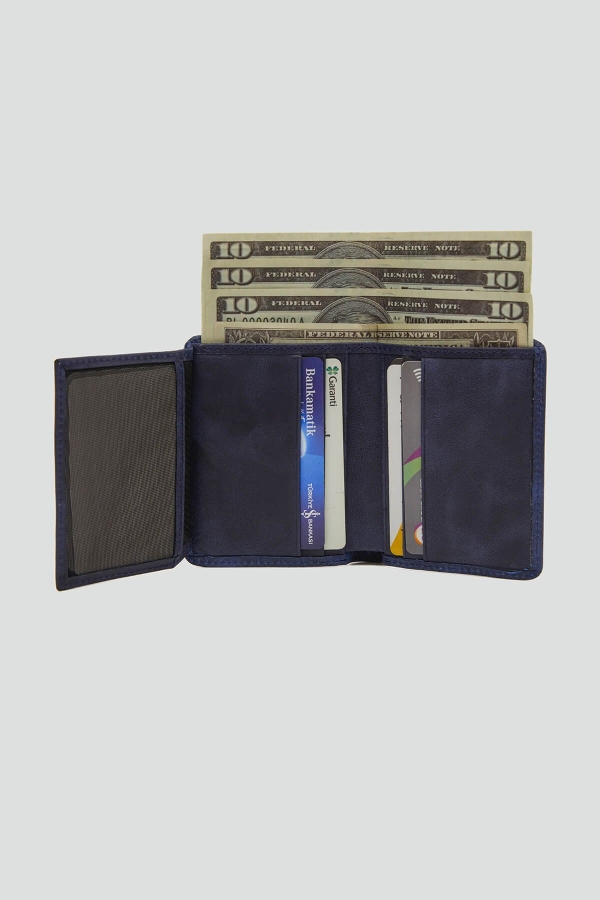
If you pay by card and carry cash only as a backup, a card holder with a note pocket may be enough. Look beyond whether the money fits: do you need to remove your cards to take out a note, and do folded notes make the cards harder to reach?
If you use cash every day, a separate note compartment may make taking out and replacing banknotes more organised. To carry notes unfolded, compare the dimensions of your currency with the compartment’s usable interior. External product length alone does not establish a fit.
For coins, look for an enclosed compartment designed for that purpose. Do not use card slots or a card-ejection chamber as a coin pocket. Explore leather wallets to compare cash and coin layouts.
Card holder or small wallet for pocket carry?
Width, height and filled thickness all matter in a front pocket. A rigid casing, corners, cover, fold and the placement of banknotes can change how the product feels. The label “mini” does not mean comfortable in every pocket.
Measure your current wallet with your everyday contents inside to create a useful reference. Compare this with the new model’s published dimensions, checking whether any stated thickness describes an empty or filled product. If that information is missing, do not assume a filled measurement.
For bag carry, consider more than the bag’s external dimensions. The opening, the space left beside other belongings and the ease of removing the product matter too.
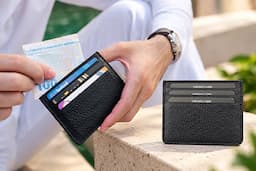
Think about your most-used card: must you take out every card or open several sections to reach it? A well-positioned traditional slot may provide all the access you need.
How should you compare card capacity?
The number of card slots is not the same as tested total capacity. Card thickness, embossing, slot construction and the contents of other compartments can affect everyday use.
Do not assume that each slot can hold several cards. Follow the stated capacity, check that cards can be removed comfortably and make sure any cover closes without force. If you need to carry more cards, consider a suitable layout instead of overfilling your current product.
Pop-up card holder or traditional wallet?
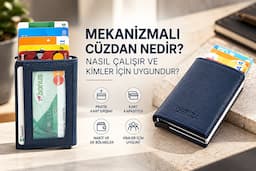
Pop-up models use a moving mechanism to present cards from a chamber. Traditional designs hold cards in individual slots from which they are removed by hand. The more practical option depends on how you prefer to reach the cards you use most often.
Assess supported card types and chamber capacity separately from external card slots. Check cash and coin storage independently; a mechanism does not establish that either compartment is included.
If you prefer no moving parts, a traditional slot-based design may suit you. If you want a mechanism, compare pop-up wallets by access, closure and cash organisation. Consider additional features such as RFID protection only when explicitly specified for your chosen model.
A practical comparison of two Deriza models
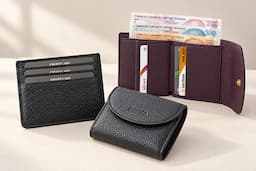
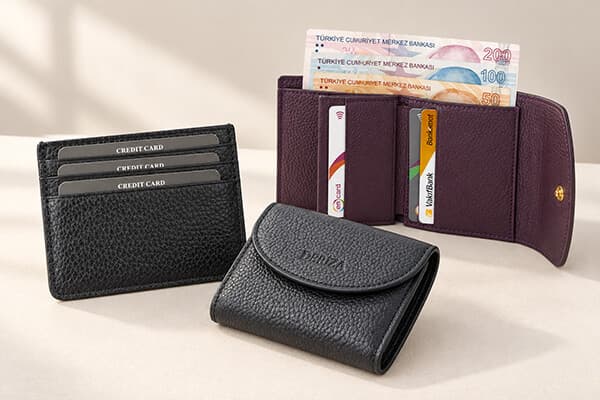
Products with similar width and height can offer different compartment layouts. These examples show the distinction between a card holder and a small wallet.
| Feature | Hakiki Deri Mini Kartlık Siyah — DRZ5000 | Mini Hakiki Deri Kadın Cüzdan Siyah Bozuk Paralı — DRZ5412 |
|---|---|---|
| Published dimensions | 10 × 8 cm | Closed: 10.5 × 8 × 3 cm |
| Card compartments | 6 | 5 |
| Banknote storage | Central pocket | 1 separate note compartment |
| Coin compartment | None | 1 |
Dimensions and compartment details come from product descriptions; filled thickness has not been tested with identical contents. The 3 cm stated for DRZ5412 is not presented here as a filled-use measurement.
In this example, the card holder has more card compartments, while the small wallet provides separate coin storage. Counting card slots alone therefore does not tell you which product will work better for you.
Three everyday examples
You pay by card but sometimes need cash
If you carry ID, travel and payment cards with a little backup cash, a card holder with note storage may be a good starting point. If folding or removing notes feels inconvenient, consider a small wallet with a separate note compartment.
You pay in cash and receive change
A coin compartment and easy access to notes become priorities, even if you carry few cards. A wallet with those compartments may suit your routine better. Also consider whether the closure works comfortably when the compartments are filled.
You travel light most days but sometimes carry more
You can use a card holder for essential cards and a wallet on days when you need extra cash or documents. Carrying both is possible too; consider the combined bulk and the need to keep track of two items. Use a consistent arrangement to avoid leaving necessary cards behind when switching.
A quick decision table for your routine
| Your need | Consider first |
|---|---|
| Essential cards, very little cash, no coins | A compact card holder with suitable cash storage |
| Cards and regular banknote use | A card holder with convenient cash access or a small wallet with a separate note compartment |
| Coins and small documents | A model with dedicated compartments for those items |
| Frequent card access | A model with accessible external slots or a pop-up mechanism |
| A tight pocket or small bag | A model whose dimensions and filled thickness suit the available space |
Five questions before buying
- How many cards do I carry daily? Separate everyday essentials from rarely used cards.
- What are my cash and coin needs? Distinguish backup cash from regular cash use.
- Which compartments are necessary? Identify the spaces you will actually use for cards, money and documents.
- Where will I carry it? Use your current product as a reference for dimensions and filled use.
- How will I reach cards and cash? Check whether the slots, covers and mechanism suit your habits.
If you can compare two products in person, use the same everyday set of cards and notes without exceeding either stated capacity. Assess loading, closing and access together; do not force a product to fit the contents.
Choose the model that suits what you carry
For card-focused use, explore men’s leather card holders and women’s leather card holders. If you regularly carry cash, coins or documents, consider wallets with compartments designed for those needs.
A men’s or women’s category does not determine practicality on its own. The better choice is the model that holds your everyday essentials comfortably, is easy to carry and works well when you need it.




Merhaba Deri Tutkunları!
Ben Recep AYCAN, Ege Üniversitesi Deri Mühendisliği mezunu bir deri mühendisiyim. 🎓 Bu blog sayfasında, deriyle ilgili merak edilen her şeyi, en detaylı ve keyifli şekilde sizlerle paylaşacağım. Umarım içeriklerimden keyif alırsınız! 😊 📧 Bana Ulaşın Sorularınız için her zaman destek@deriza.com adresinden bana yazabilirsiniz. Keyifli okumalar dilerim!