

Does a Leather Jacket Keep You Warm in Winter? Winter Guide
Quick Answer: Does a Leather Jacket Keep You Warm in Winter?
Yes, a genuine leather jacket designed for winter use can contribute to thermal comfort in cold weather. However, this is not determined by the outer leather alone.
While the leather outer shell can help limit air movement, the lining, insulation where present, garment length, collar and closure system, fit, and the layers worn underneath all work together to determine winter performance. For this reason, not every genuine leather jacket provides the same level of warmth.
Does a leather jacket keep you warm in winter? is one of the most common questions among people choosing genuine leather outerwear for autumn and winter. However, a simple “yes” or “no” is not technically sufficient.
Cold-weather performance does not depend only on the material used on the outer surface. In addition to the leather structure and thickness, the lining, insulation where present, fit, garment length, collar, cuffs, zipper and other closure details all work together.
For this reason, when evaluating a leather jacket, you should look not only at whether it appears thick or carries the words “genuine leather”, but at the complete construction of the garment.
Factors That Determine a Leather Jacket's Winter Performance
| Factor | Effect on Winter Use |
|---|---|
| Leather Outer Surface | Forms part of the outer shell that can help limit air movement and wind exposure. |
| Leather Structure and Thickness | Can affect the outer shell's weight, flexibility, handle and air-permeability characteristics. |
| Lining | Affects the inner surface and wearing comfort; it does not automatically mean high thermal insulation. |
| Insulation | When present, it can help reduce heat loss by supporting trapped-air zones within the garment structure. |
| Garment Length | Affects how much of the body is covered against the external environment. |
| Collar and Closure | Can help reduce cold-air entry around the neck and front torso. |
| Cuffs and Hem | Affect air movement through garment openings. |
| Fit | An excessively tight or loose fit can affect layering and overall comfort. |
| Layers Underneath | Knitwear, wool or thermal layers contribute to the insulation of the complete clothing system. |
What Is the Real Role of Leather in Winter Use?
One of the most common misconceptions is that a thick-looking leather surface will automatically provide strong thermal insulation.
Depending on its surface structure, thickness and finishing, genuine leather can function as an outer shell that helps limit air movement. This can be particularly important in windy conditions.
Moving cold air can remove the warm air layer around the body and increase the sensation of cold. The leather outer surface can help reduce the effect of this air movement.
However, reducing wind exposure is not the same as providing high thermal insulation.
In cold weather, the lining, insulation where present, garment length, closure system and the layers worn underneath also play important roles.
Leather Engineer's Note
When evaluating a leather jacket from a thermal perspective, it is more accurate to consider the leather not as an isolated material, but as the outer shell of a clothing system.
The leather forms the outer layer against environmental conditions and air movement; the lining forms the inner surface; insulation, where present, forms the insulating layer; and knitwear, sweaters or thermal garments provide additional layers.
Winter performance results from these elements working together, not independently.
Does Leather Thickness Affect Warmth?
Leather thickness can influence the character of the garment's outer shell. However, thicker leather does not always mean a warmer jacket.
Animal type, fibre structure, tanning, fatliquoring and finishing can also affect the final behaviour of the leather.
Thicker leather can also alter the garment's weight, flexibility and movement characteristics.
For this reason, the goal in a winter leather jacket is not to use the thickest leather possible, but to combine a leather structure suited to the intended use with an appropriate internal construction.
Does a Lamb Leather Jacket Keep You Warm in Winter?
Lamb leather can generally provide a relatively soft, lightweight, supple and drapable character in leather apparel. Deriza leather apparel collections also use genuine lamb leather.
However, the softness or lightness of lamb leather does not by itself determine whether the jacket is warm or cold.
The same type of lamb leather outer surface can deliver very different winter performance depending on the lining, insulation, garment length and closure system.
For this reason, when evaluating a lamb leather jacket, look not only at the leather type but also at the lining, insulation, fit, length and closure construction.
For a comparison of lamb leather and cowhide, see Lamb Leather vs Cowhide: Which Is Better?
How Does the Lining Affect Warmth?
The lining forms the inner surface of the jacket and plays a role in wearing comfort, movement and internal garment construction.
However, lining and insulation are not the same thing.
A leather jacket with a textile lining should not automatically be considered suitable for severe winter conditions. In addition to the lining, insulation where present, garment length, collar and closure system should also be evaluated.
Therefore, seeing the word “lined” on a product page does not by itself indicate how warm the jacket will be.
Why Is Insulation Important in a Leather Jacket?
One of the basic functions of insulation in jackets designed for cold weather is to help limit heat transfer by supporting relatively still air zones within the garment structure.
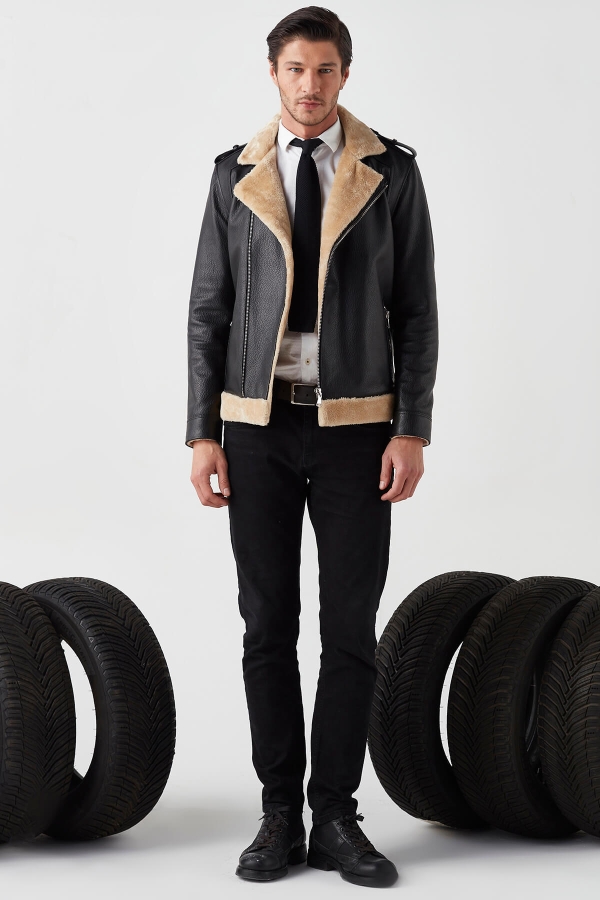
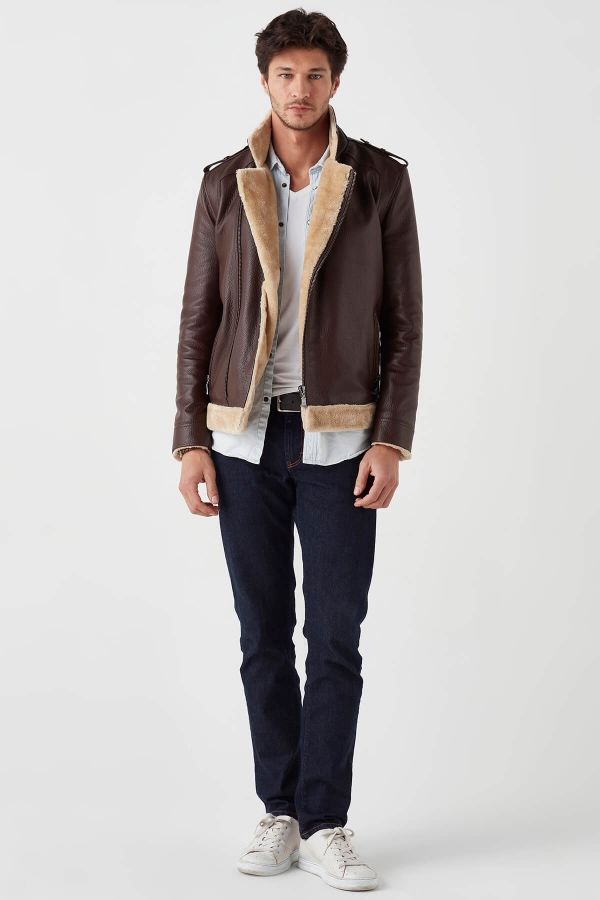
In quilted or padded leather jackets, insulation between the outer leather and lining can create a different thermal structure from that of a thin, uninsulated leather jacket.
However, the jacket's bulky appearance alone should not be used to make a definitive judgement about warmth.
The type, amount and distribution of insulation, together with the overall garment construction, all matter.
Does a Leather Jacket Let Wind Through?
Depending on its structure and finishing, genuine leather can provide an effective outer surface against air movement. This is one reason leather jackets can feel protective in windy weather.
However, wind performance depends on more than the leather panels alone.
Cold air can enter through:
- the front zipper and closure area,
- the collar opening,
- the cuffs,
- the waist or hem.
For this reason, a higher or well-closing collar, the main closure system, cuffs and a balanced fit are also important for winter use.
Does Jacket Length Affect Winter Performance?
In general, longer outerwear covers a larger area of the body. For this reason, a short jacket ending around the waist may not feel the same in use as a longer model covering more of the hips or upper legs.
However, when choosing a longer model, you should also consider weight, freedom of movement, sitting comfort, driving and everyday use.
Why Are the Collar and Closure Important in Winter?
The neck and front torso are among the areas where cold air can enter a garment.
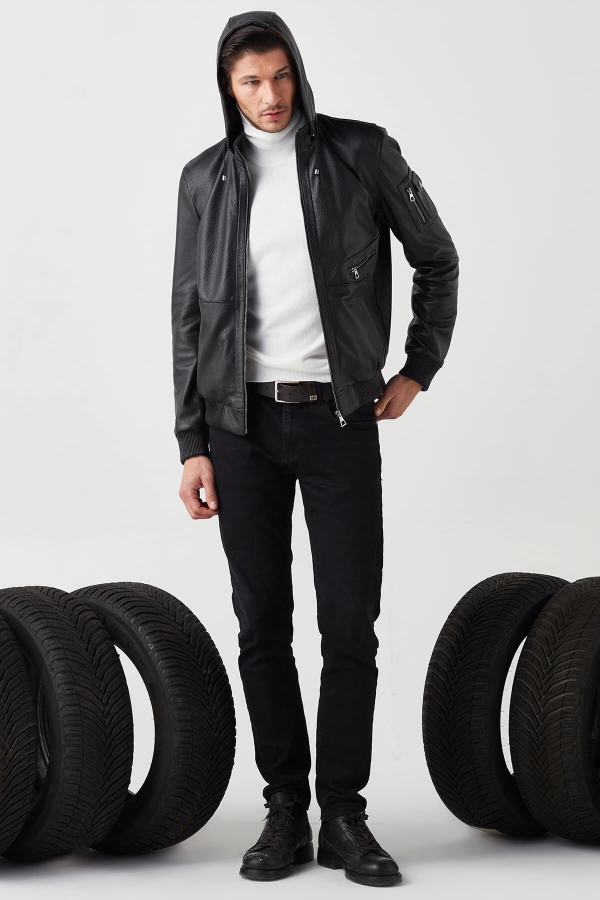
Stand collars, high-closing collars, hoods or designs that provide greater coverage can help reduce air entry.
With more open collar designs, a scarf or another additional layer may be useful.
Similarly, the construction of the zipper and other closure systems can affect air movement through the front of the garment.
Does Fit Affect Winter Performance?
Yes. Fit affects both air movement and the layers that can be worn underneath.
An excessively loose garment may allow more air movement through the collar, waist or other openings.
An excessively tight jacket may make layering difficult, restrict movement and reduce the comfort of the clothing system.
For winter use, actual garment measurements and the layers you plan to wear underneath should be considered together.
For more information about sizing, see How to Choose the Right Leather Jacket Size
At What Temperature Can a Leather Jacket Be Worn?
There is no single temperature that applies to every leather jacket and every wearer.
The same outdoor temperature can feel very different depending on:
- wind speed,
- humidity,
- personal sensitivity to cold,
- the lining and insulation structure,
- garment length,
- collar and closure system,
- layers worn underneath,
- activity level.
For this reason, fixed statements such as “a leather jacket can be worn down to X degrees” are not reliable buying criteria without knowing the technical construction of the garment.
In What Weather Can a Leather Jacket Be Worn?
Depending on the construction, leather jackets can be used from cool spring days through autumn and winter.
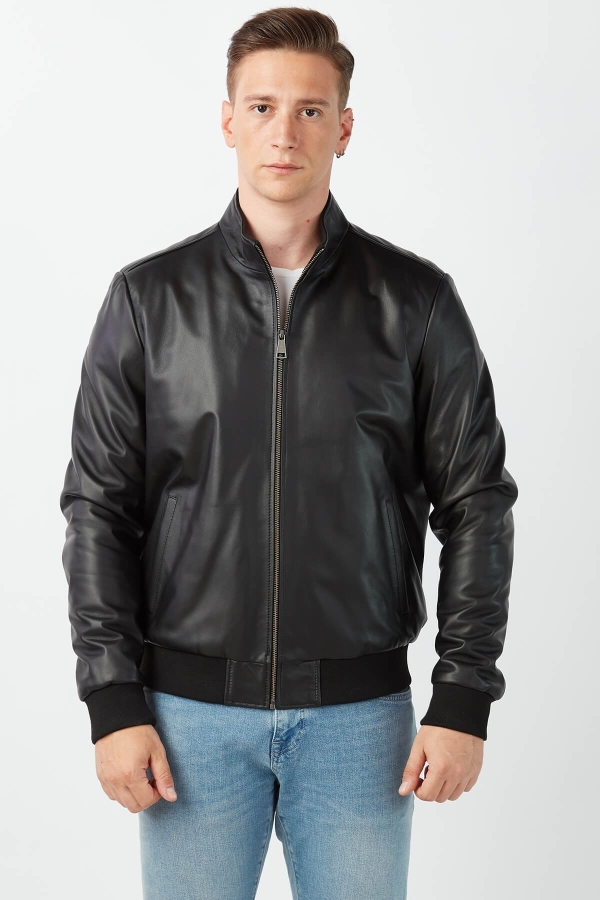
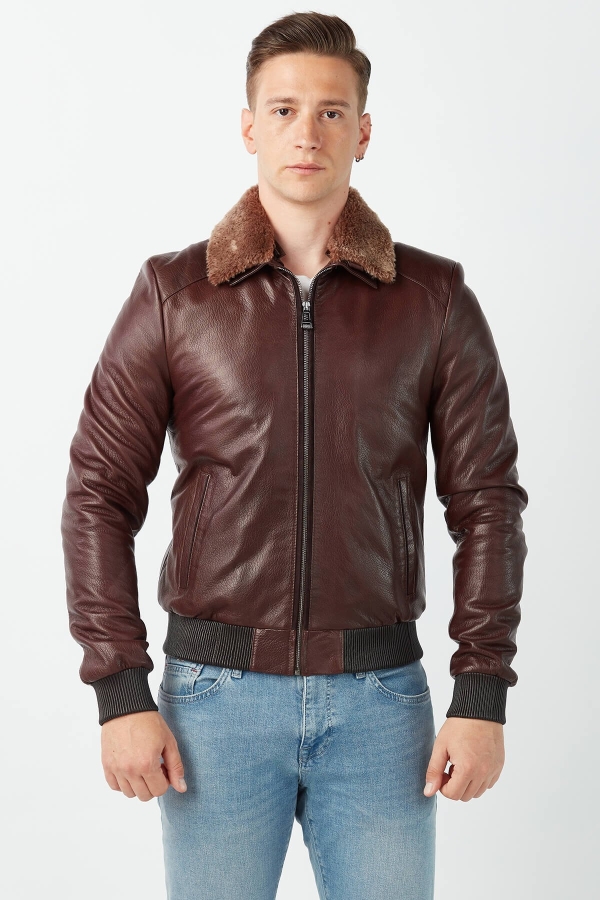
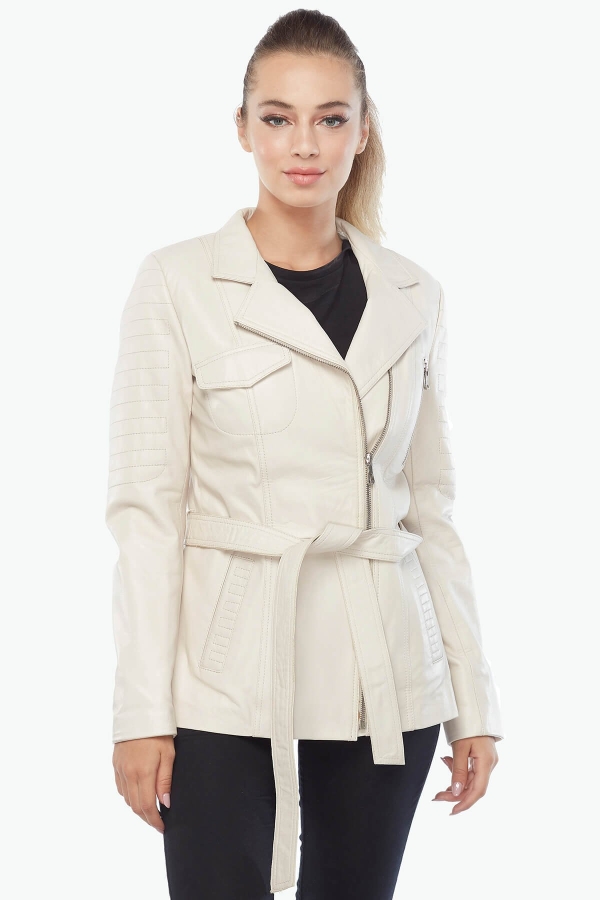
Lightweight, thinly lined and uninsulated models may be better suited to transitional seasons, while insulation, a more protective collar, a hood, a longer cut and a more closed construction may support colder-weather use.
The key point is not whether the product is simply described as “winter”, but its actual technical construction.
Does Layering Make a Leather Jacket Warmer?
Yes. In winter clothing, it is more useful to think in terms of a layered system rather than relying on the outer garment alone.
A simple layering system can be considered as follows:
- Base layer: The first garment layer worn against the body, selected according to the conditions of use.
- Mid layer: Knitwear, a wool sweater or another insulating layer.
- Outer layer: The leather jacket, which acts as the outer shell against wind and external conditions.
In this system, the leather jacket does not provide all the warmth by itself; it acts as the protective outer layer of the complete clothing system.
Is There a Winter-Use Difference Between a Leather Jacket and Leather Outerwear?
In everyday language, terms used for lighter leather jackets and heavier leather outerwear can sometimes overlap. For this reason, winter performance should not be judged from the product name alone.
A lightweight, short, thinly lined or uninsulated model may be better suited to transitional weather.
A product designed for winter use may, depending on the model, include insulation, a more protective collar, a different closure system or greater body coverage.
For winter shopping, focus on the actual construction and technical features rather than the name alone.
What Should You Check on the Product Page When Choosing a Winter Leather Jacket?
- Leather: Is the leather type clearly stated?
- Lining: Is the inner surface construction described?
- Insulation: If insulation is used, is it stated separately?
- Garment length: Does the actual jacket length suit your needs?
- Collar: How much coverage does it provide around the neck?
- Closure: How are the main zipper, buttons or other closure systems designed?
- Cuffs and hem: How are the openings that can affect air entry designed?
- Fit: Is there enough room for knitwear or another layer underneath?
- Actual garment measurements: Can you evaluate whether there is enough room for layered use?
- Detail photos: Are the collar, lining, zipper, cuffs and interior construction shown clearly enough?
Quick Winter Leather Jacket Checklist
| Check | Question to Ask |
|---|---|
| Leather | Is the outer shell appropriate for the intended use? |
| Lining | How is the interior constructed? |
| Insulation | If present, is it clearly stated on the product page? |
| Length | How much of the body does it cover, and does it suit my everyday use? |
| Collar / Closure | How effectively does it limit air entry around the neck and front torso? |
| Fit | Does it allow layering and comfortable movement? |
| Layering | Can I wear the mid layer I need underneath the jacket? |
Deriza Leather Jacket Collections
Deriza leather apparel collections use genuine lamb leather. However, the lining, insulation, cut, length, collar and closure details can vary between models.
For this reason, winter-use performance should be evaluated model by model.
To compare suitable options, explore Leather Jackets, Men's Leather Jackets and Women's Leather Jackets.
Frequently Asked Questions About Leather Jackets and Winter Use
Is a genuine leather jacket suitable for winter?
It depends on the model. A genuine leather outer surface can help form a protective shell that limits air movement, but actual winter performance must be evaluated together with the lining, insulation where present, fit, length, collar and closure system.
Can a leather jacket feel cold?
The leather surface can help limit air movement. However, a lightweight or uninsulated interior, an open collar, a short cut or air entering through garment openings may still make the wearer feel cold.
Does wind pass through a leather jacket?
Leather air permeability can vary according to the structure, thickness and finishing. In general, the leather outer surface can help reduce wind exposure, but overall performance also depends on the collar, zipper, cuffs and hem or waist construction.
At what temperature can a leather jacket be worn?
There is no single temperature limit that applies to all leather jackets. Garment construction, wind, humidity, layers worn underneath, activity level and personal sensitivity to cold should all be considered together.
Can a lamb leather jacket be worn in winter?
Yes. Jackets with a lamb leather outer surface can be worn in winter. However, warmth depends not only on the leather type but also on the lining, insulation where present, garment length, fit, collar and closure system.
What should be worn under a leather jacket in winter?
Depending on the weather, you can wear anything from lighter tops to knitwear, wool sweaters or thermal layers. As temperatures fall, a layered clothing system can make a greater contribution to total thermal comfort.
Does a lined leather jacket always keep you warm?
No. The lining is the inner surface of the jacket and does not automatically provide strong insulation. For winter performance, you should also check insulation where present, garment length, closure system, fit and layering.
Conclusion: Leather Alone Does Not Determine Warmth
The most accurate answer to “Does a leather jacket keep you warm in winter?” is this: a leather jacket designed for winter use, combined with appropriate layers, can be an effective outerwear option in cold weather.
However, it would be incorrect to assume that all leather jackets provide the same level of warmth.
The ability of the leather outer surface to reduce air movement and wind exposure can be an important advantage. Actual thermal comfort is created by leather + lining + insulation where present + garment length + collar and closure + fit + layers worn underneath working together.
For this reason, when choosing a winter leather jacket, do not focus only on the “genuine leather” label, how thick the product looks or whether it is described as “winter”. Instead, look at how the garment is designed as a complete system.