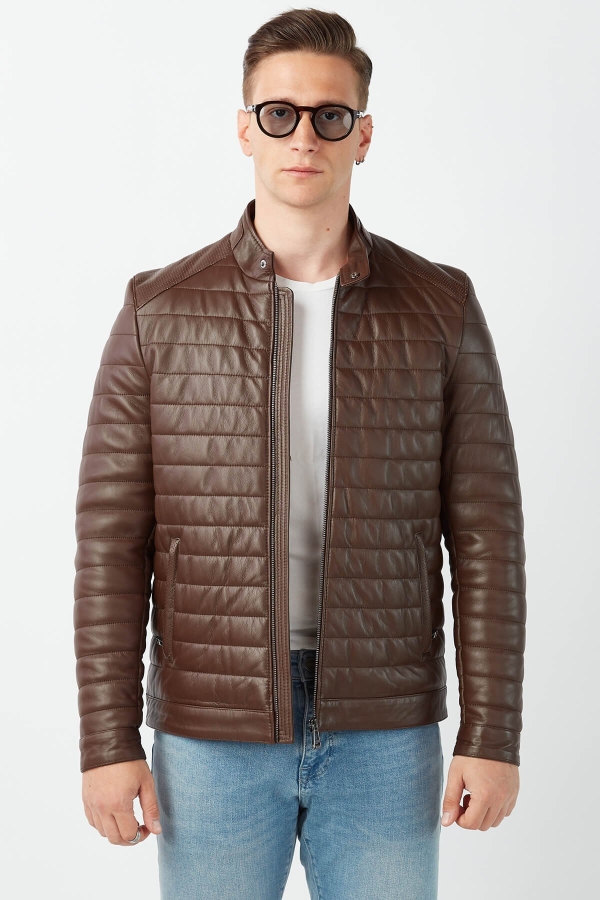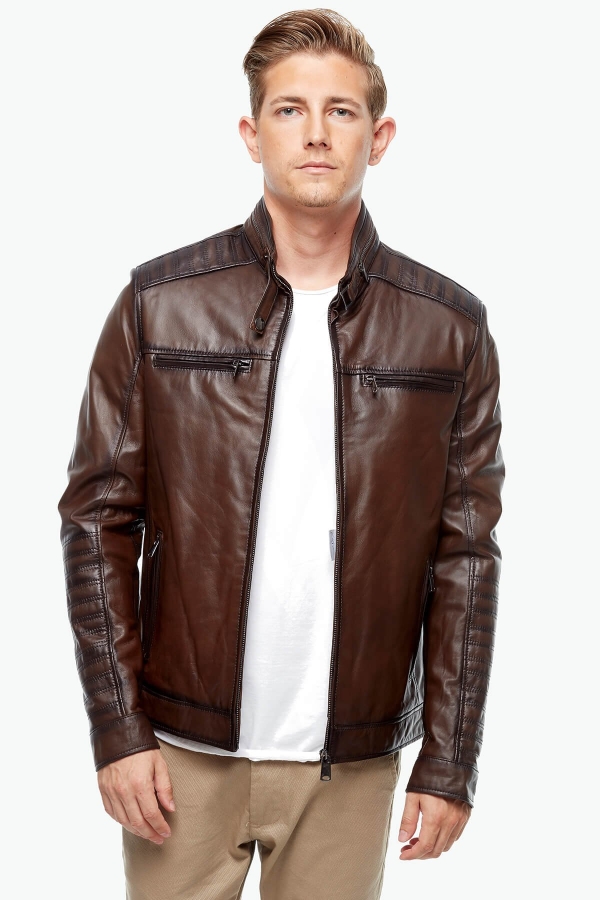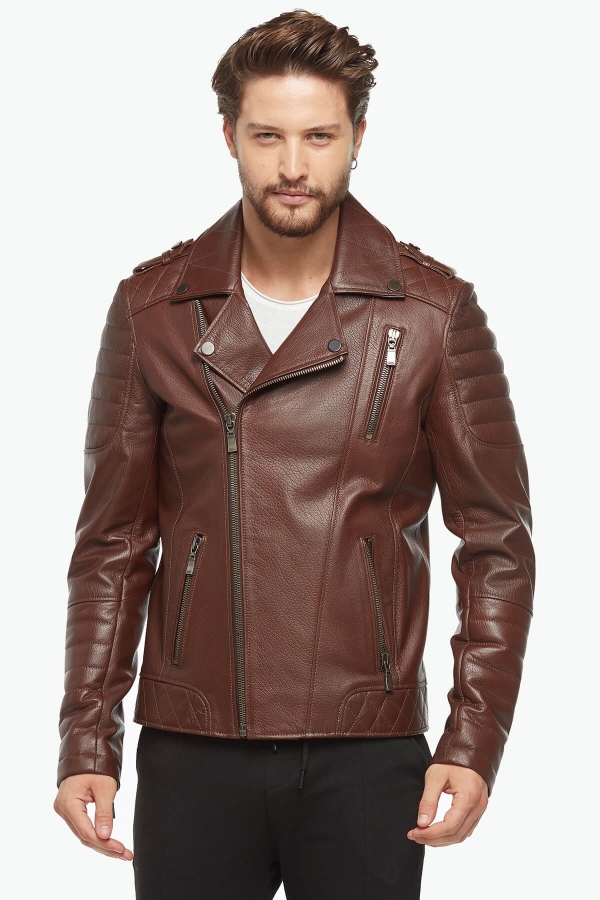
What to Look for When Buying a Genuine Leather Jacket? Buying Guide
Quick answer: When choosing a genuine leather jacket, it is not enough to consider only whether the product is made from real leather, its color or its price. The leather type and surface character, fit and actual garment measurements, lining and insulation where applicable, stitching, zippers and hardware, jacket length, intended use and season should all be evaluated together.
Genuine leather describes the material; it is not a guarantee of overall quality. A well-made leather jacket is one in which the leather, pattern, cutting, stitching, lining, hardware and intended use work together as a complete product.
Buying a genuine leather jacket can mean choosing an outerwear piece intended for long-term use. However, the right decision should not be based only on a “genuine leather” label or on how attractive the jacket looks at first sight.
Two jackets made from the same type of leather can differ in weight, softness, surface character, fit, lining, workmanship and overall performance. For this reason, answering “How should I choose a genuine leather jacket?” requires evaluating the product as a whole.
In this guide, we examine the main points to consider before purchasing a leather jacket, from leather type and sizing to lining, insulation, stitching, hardware, jacket length, seasonal use and overall construction.
10 Key Criteria When Choosing a Genuine Leather Jacket
| Criterion | What Should You Check? | Why Is It Important? |
|---|---|---|
| Leather type | Lamb leather, cowhide or another specified leather type | Affects softness, weight, handle and the overall character of the jacket. |
| Surface and finish | Texture, color, surface treatment and suitability for the design | Can affect appearance, hand feel and surface behavior during use. |
| Fit and size | Shoulders, chest, waist, sleeves and actual garment measurements | Directly affects appearance and freedom of movement. |
| Lining | Interior construction, stitching and compatibility with the jacket | Important for the internal construction and ease of putting the jacket on and taking it off. |
| Insulation | Type and amount, if the model contains insulation | One of several factors affecting thermal comfort in cold weather. |
| Stitching | Consistency, panel joints and stress points | Helps evaluate construction and manufacturing quality. |
| Zippers and hardware | Smooth operation and secure attachment | These components are exposed to repeated mechanical use. |
| Jacket length | Short, standard or long | Affects movement, intended use and seasonal performance. |
| Intended use | Everyday, urban, casual, classic or winter use | Helps determine the most suitable design and construction. |
| Season | Leather, lining, insulation, length and layering | All contribute to the jacket's overall thermal comfort and usability. |
1. First Confirm That the Jacket Is Actually Made from Genuine Leather
The first stage of the buying decision is understanding what material has been used. The product description and label should clearly state the leather material.
However, consumer tests such as relying only on appearance, smell or a drop of water are not definitive methods of identifying genuine leather. Finishing treatments can make natural leather look more uniform, while synthetic materials can imitate many characteristics of leather.
For a detailed explanation, read our How to Tell If a Leather Jacket Is Genuine guide.
Leather Engineer's Note: Genuine Leather and High Quality Are Not the Same Thing
Knowing that a jacket is made from genuine leather identifies the material. Evaluating the quality of the finished jacket is a separate step.
A more useful approach is to consider leather + finish + cutting + pattern + stitching + lining + hardware + construction together.
2. Why Does Leather Type Matter?
Leather type is one of the fundamental factors that defines the character of a jacket. Different leather types and processing methods can produce differences in weight, thickness, softness, flexibility, drape and surface appearance.
In Deriza leather apparel collections, genuine lamb leather is the primary material used for leather jackets and outerwear. Its relatively soft, lightweight and supple character can be suitable for garments where freedom of movement is important.
However, the term “lamb leather” alone does not define the quality level of a product. Raw hide selection, fiber structure, thickness, tanning, fatliquoring, dyeing and finishing all contribute to the properties of the final leather.
3. How Should You Evaluate the Leather Surface and Finish?
Genuine leather is a natural material and can show variations in texture, pores and tone. However, evaluating quality only by asking whether natural marks are visible is not reliable.
Finishing can significantly change the appearance, hand feel and surface behavior of leather. For this reason, a very uniform surface is not automatically synthetic, just as a visibly irregular surface is not automatically high quality.
The important question is whether the surface treatment is appropriate for the jacket's design and intended use.
4. How Should You Choose the Fit and Size of a Leather Jacket?
Even a well-made jacket will not provide the expected experience if the size is wrong. For this reason, you should not rely only on your usual S, M, L or numerical size.
Shoulders, chest, waist, sleeve length and overall jacket length should be evaluated together with the model's fit. Slim, regular and oversized designs may fit very differently even when they carry the same size label.
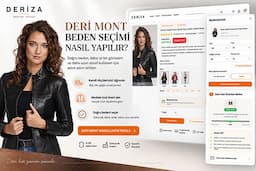
Deriza leather apparel size charts are not based on a generic sizing template. Every size of every model is physically measured and entered into a product-specific size chart.
You can also use the Find My Size feature on product pages to evaluate your body measurements together with the model's actual measurements, fit information and your preferred wearing style.
For a detailed guide, see How to Choose the Right Leather Jacket Size .
5. Should a Leather Jacket Fit Tight or Relaxed?
The idea that every leather jacket should fit tightly is incorrect. The appropriate fit depends on the design of the model.
A slim or fitted jacket may follow the body more closely, but when fully closed it should not create excessive pulling across the chest or waist, and normal arm movement should not be significantly restricted.
Regular-fit models may provide more balanced ease, while extra volume is intentionally built into an oversized design.
Therefore, the better question is not “Should a leather jacket be tight?” but “Does this jacket fit me the way it was designed to fit?”
6. Why Is the Lining Important?
Evaluating only the outer leather surface provides an incomplete picture of a jacket. The lining is an important part of the garment's internal construction.
When examining the lining, consider not only the fabric name but also how it is attached, whether it sits correctly inside the body and sleeves, the quality of the seams and whether it creates unnecessary tension during use.
The lining can also affect how easily the jacket can be put on and removed and how it works with layers underneath. However, using a particular lining material does not automatically make a jacket higher quality or warmer.
7. What Is the Difference Between Insulated and Uninsulated Leather Jackets?
Not every leather jacket needs insulation. Insulation is a construction component selected according to the intended use and seasonal performance of the model.
In cold-weather designs, insulation can contribute to thermal comfort together with the lining and the rest of the jacket's construction.
However, “more insulation always means a better jacket” is not a reliable rule. Additional insulation can also change weight, volume and freedom of movement.
The warmth of a leather jacket depends on the combination of leather + lining + insulation where applicable + jacket length + closure design + wind conditions + clothing layers underneath.
8. How Can You Check Stitching Quality?
In leather garments, stitching is more than a visual detail. Panel joints, pocket areas, zipper attachments, collars, sleeves and other stress points all contribute to the structural integrity of the jacket.
When inspecting stitching, look at:
- the overall consistency of stitch lines,
- the cleanliness of panel joints,
- unnecessary puckering or pulling,
- pocket and zipper attachment areas,
- the connection between the lining and outer garment.
Leather Engineer's Note: Stitching Leather Is Different from Stitching Fabric
A sewing needle creates permanent holes in leather. For this reason, accurate panel positioning and controlled stitching are particularly important in leather garment construction. A sewing error that can sometimes be easily unpicked and resewn in textile garments may be more difficult to correct in leather.
9. What Should You Check in Zippers, Buttons and Metal Hardware?
Looking only at the brand name of a zipper or hardware component is not enough. What matters is whether the component is suitable for its use on the jacket and whether it works reliably.
The zipper should operate smoothly without unnecessary catching, the puller should be easy to use and the zipper should be securely attached to the leather.
Attachment points for buttons, snaps, buckles and other metal components should also be inspected. More metal hardware does not automatically mean better quality.
10. Should You Choose a Short or Long Leather Jacket?
Choosing between a short and long model is not only a matter of appearance. Jacket length can also affect movement, layering and the conditions in which the garment is used.
Who may prefer a short leather jacket?
Shorter models can be practical for everyday city wear, driving and more dynamic outfits. Because they cover less of the lower body, their movement characteristics differ from longer models.
What should you consider when choosing a long leather jacket?
As the jacket reaches the hips or extends further down, shoulder and chest fit alone may no longer be enough. The way the jacket behaves when walking and sitting should also be evaluated.
Greater length can also change the amount of leather used, garment weight and construction. Therefore, there is no general rule that “longer means better quality” or “lighter and shorter is automatically better.”
11. Decide How You Intend to Use the Jacket
The best leather jacket is not the same jacket for every person. The right product is the one that suits your intended use.
Before buying, consider questions such as:
- Will the jacket be used mainly for everyday wear?
- Will it be worn for work or with more classic outfits?
- Will it frequently be worn while driving?
- Is it mainly intended for autumn and spring?
- Do you expect to wear it on cold winter days?
- Will you wear thick sweaters or other layers underneath?
- Do you want a shorter, more mobile design or longer outerwear?
These answers help determine the appropriate model, fit, lining, insulation and length.
12. What Should You Look for in a Leather Jacket for Winter?
When choosing a leather jacket for winter, looking only at leather thickness is not enough. Cold-weather performance depends on a combination of factors.
The lining, insulation where present, jacket length, collar and closure design, wind conditions and layers worn underneath all influence thermal comfort.
Therefore, thicker leather does not automatically mean a warmer jacket, while lighter leather may still be suitable for particular conditions when combined with appropriate construction and layering.
13. How Should Price and Quality Be Compared?
A higher price alone is not proof of higher quality. Likewise, a lower price does not automatically mean a poor product.
When evaluating the price of a leather jacket, consider:
- leather type and quantity used,
- leather selection and finishing,
- complexity of cutting and production,
- lining and insulation where applicable,
- zippers and hardware,
- workmanship,
- jacket length and construction.
Comparing two structurally different jackets only by their selling price does not provide a reliable quality comparison.
How to Choose a Genuine Leather Jacket for Men
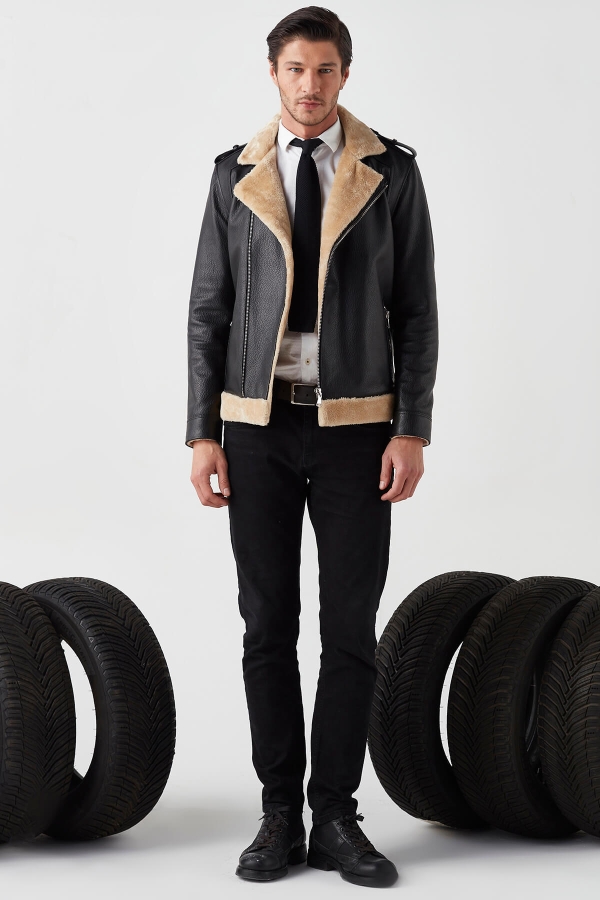
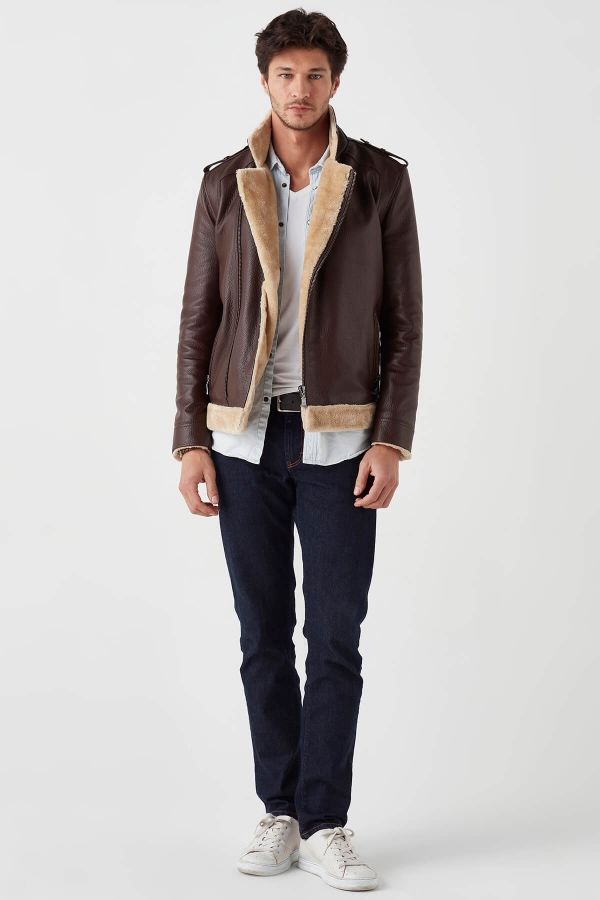
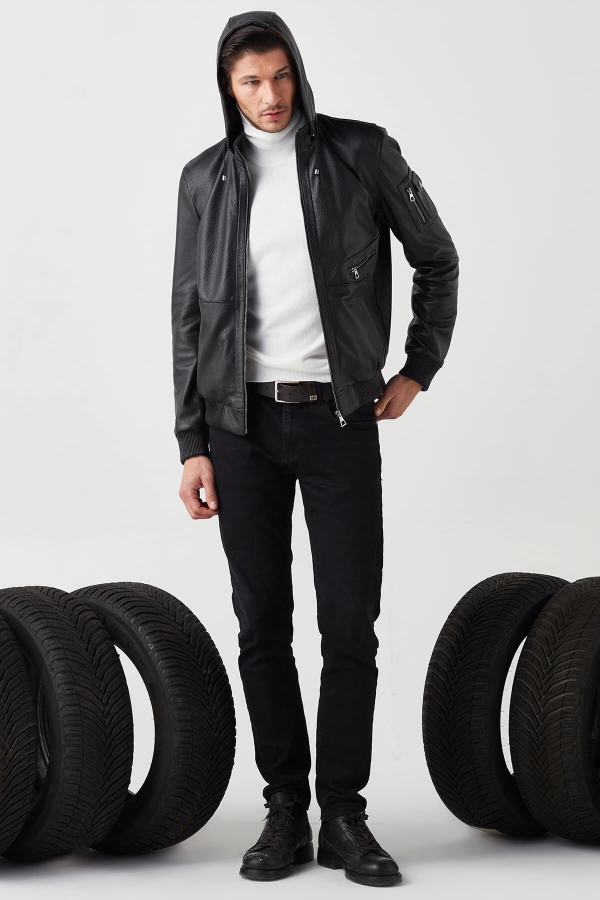
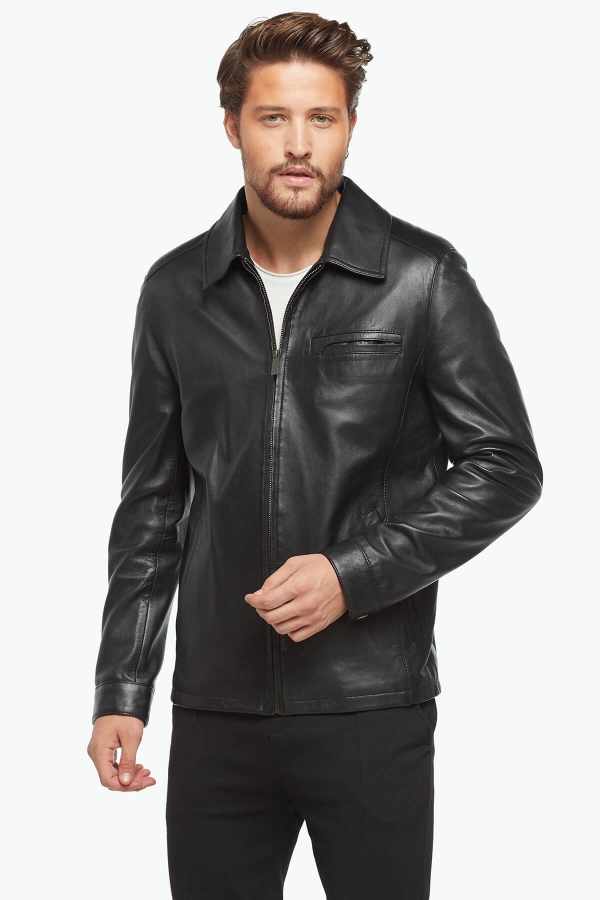
When choosing a men's leather jacket, chest, shoulders, waist and sleeve balance should be evaluated together with the intended use of the model. Bomber, biker, pilot, classic, hooded and longer styles can all have different fits and different use cases.
Explore the Men's Leather Jackets collection to compare models.
How to Choose a Genuine Leather Jacket for Women
When choosing a women's leather jacket, shoulder and chest fit should be evaluated together with the waistline, jacket length and intended silhouette.
A fitted design, a straight-cut jacket and an oversized model can create completely different silhouettes even in the same labeled size.
Explore the Women's Leather Jackets collection to compare models.
What Should You Check When Buying a Genuine Leather Jacket Online?
Because you cannot physically touch the product when shopping online, your decision should rely as much as possible on clear and verifiable product information.
When available, check whether the product page clearly provides:
- the leather material,
- the leather type,
- multiple product photographs and close-up details,
- fit information,
- product-specific garment measurements,
- lining and insulation information where applicable,
- closure and design details,
- return and exchange conditions.
For sizing in particular, actual measurements of the specific model can be more useful than a generic S-M-L chart.
Genuine Leather Jacket Buying Checklist
Leather Engineer's Note: How Can You Recognize a High-Quality Leather Jacket?
A high-quality leather jacket is not simply the softest, thickest, lightest or most expensive jacket.
A better quality assessment considers whether the leather is appropriate for the intended use of the model and how well the fit, cutting, stitching, lining, hardware and construction work together.
Frequently Asked Questions About Buying Genuine Leather Jackets
What should I check first when buying a genuine leather jacket?
Start by checking the material description and leather type. Then evaluate the surface, fit and size, lining, insulation where applicable, stitching, zippers, hardware, jacket length and intended use together.
How can you tell if a leather jacket is high quality?
Quality is not determined only by whether the jacket is genuine leather or by softness. Leather and finish should be evaluated together with cutting, fit, stitching, lining, zippers, hardware and construction.
Should you buy a leather jacket tight?
No. The correct fit depends on the model. A slim-fit jacket can follow the body more closely, but it should not be so small that normal movement or closure becomes difficult.
Is lamb leather good for leather jackets?
Lamb leather's relatively soft, lightweight and supple character can be suitable for leather apparel. However, the term “lamb leather” alone does not determine the overall quality of the finished jacket.
Is an insulated leather jacket better?
Not necessarily. Insulation can contribute to warmth in winter models, but it should be evaluated together with the lining, length, weight, intended use and overall construction.
Is an expensive leather jacket always better?
No. Price can be affected by leather type, quantity of leather used, finish, design complexity, lining, insulation, hardware and workmanship. Price alone should not be treated as proof of quality.
Conclusion: The Best Leather Jacket Is the One That Matches Your Needs
When buying a genuine leather jacket, answering only the question “Is it real leather?” is not enough. Leather type and surface, fit and sizing, lining, insulation, stitching, zippers, hardware, length, season and intended use should all be considered.
Genuine lamb leather is the primary material used in Deriza leather apparel collections. In addition, every size of every model is physically measured to create product-specific size charts.
This makes it possible to make a purchase decision based not only on the material name or size label, but on the actual characteristics of the product and your intended use.
Explore the Genuine Leather Jacket Collection
Compare models according to your intended use, style and measurements in the Deriza leather jacket collection.