What to Look for When Buying a Men's Leather Jacket
Quick Answer: How to Choose a Men's Leather Jacket
Choosing a men's leather jacket involves more than checking whether the material is genuine leather. Leather type, fit, size, actual garment measurements, lining, insulation, stitching, zippers, hardware, jacket length, intended use and season should all be considered together. The right leather jacket combines suitable materials, construction, fit and intended use.
When buying a men's leather jacket, the right choice should not be based on colour and appearance alone. Genuine leather is a natural and variable material. Leather type, thickness, finish, garment construction, lining and workmanship can all influence the jacket's appearance, comfort and overall wearing characteristics.
For this reason, there is no single answer to the question of how to choose a men's leather jacket. At Deriza, we evaluate the physical characteristics of the leather together with the garment's fit, construction and intended use.
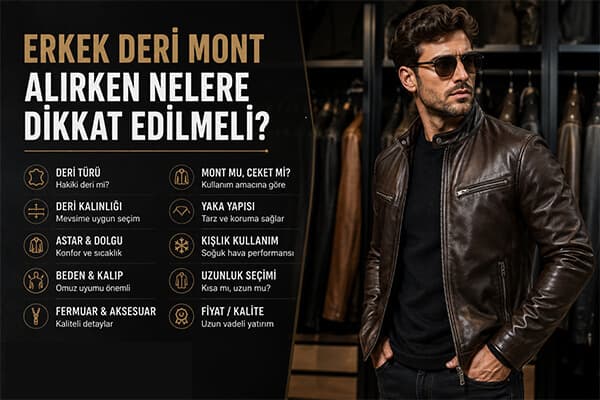
10 Key Criteria for Choosing a Men's Leather Jacket
| Criterion | What to Check | Why It Matters |
|---|---|---|
| Leather Type | Leather used and intended purpose | Can affect softness, weight, flexibility and character. |
| Leather Thickness | Thickness appropriate for the design | Influences weight, structure, movement and seasonal use. |
| Fit and Size | Shoulders, chest, waist, sleeves and actual garment measurements | Determines appearance and freedom of movement. |
| Lining and Insulation | Interior construction appropriate for the season | Important for thermal comfort and intended season. |
| Stitching | Consistency and high-stress areas | Important for garment construction and performance. |
| Zippers and Hardware | Smooth operation and secure attachment | Frequently used components affect everyday usability. |
| Length and Style | Short, standard or longer cuts | Influences movement, appearance and use. |
| Collar and Closure | Stand collar, classic collar, hood, zipper or buttons | Affects both styling and weather protection. |
| Intended Use | Casual, smart, sporty, transitional or winter use | Helps determine the most suitable construction. |
| Price / Quality | Materials, construction and product features | Price alone is not a reliable measure of quality. |
1. Check the Type of Leather
Leather type is one of the important factors when choosing a quality men's leather jacket. It can influence not only the appearance of the surface but also the garment's weight, softness, flexibility, drape and overall character.
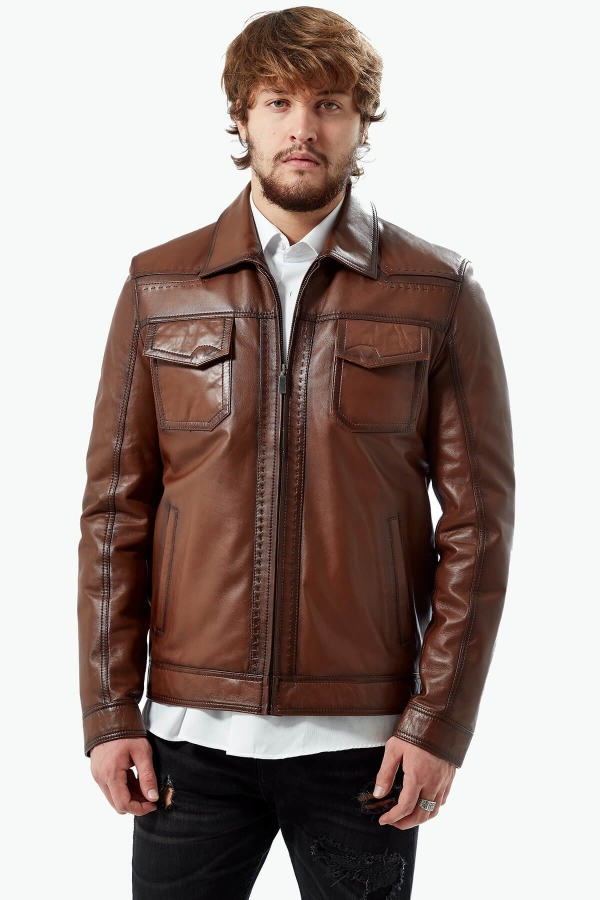
Deriza predominantly uses genuine lamb leather in its leather apparel collection. Lamb leather is commonly used in leather garments because it can offer a relatively soft, lightweight and supple character.
For a more detailed comparison, see our Lamb Leather vs Cowhide: Which Is Better? guide.
Leather Engineer's Note
The quality of a leather jacket cannot be determined by a “genuine leather” label alone. Raw hide characteristics, fibre structure, tanning, fatliquoring, thickness adjustment, finishing, cutting and garment construction all influence the final product.
A very soft leather is not automatically higher quality, just as thicker leather is not automatically better. The material should be appropriate for the design and intended use.
2. Leather Thickness Is Not a Quality Grade
A common misconception is that thicker leather always means better quality. Leather thickness should instead be evaluated together with the jacket's design, fit, lining, insulation, weight and intended use.
A lightweight transitional jacket and a cold-weather leather jacket do not have identical construction requirements. The key is not maximum thickness, but appropriate material selection.
3. Choose the Fit Using Actual Garment Measurements
A men's leather jacket should not be selected solely by an S, M or L label. Two jackets carrying the same nominal size can have different cuts and actual measurements.
Shoulders, chest, waist, sleeve length and garment length should be considered together. With the jacket closed, there should not be excessive pulling across the chest or waist, and normal arm movement should not be noticeably restricted.
Deriza size charts are based on measurements taken from the actual garment for the relevant model and size, rather than relying only on a generic body-size chart. The Find My Size feature compares the user's measurements and fit preference with actual product measurements to help with size selection.
For more information, see How to Choose the Right Leather Jacket Size .
Size recommendations are guidance rather than a guarantee of exact fit, as body proportions and personal fit preferences vary.
4. Check the Lining and Insulation
Thermal comfort is not determined by the outer leather alone. Lining, insulation when present, garment length, collar, closure and the layers worn underneath all contribute.
Interior construction can vary between Deriza models, so lining and insulation details should always be checked on the individual product page.
5. Choose the Style According to How You Will Wear It
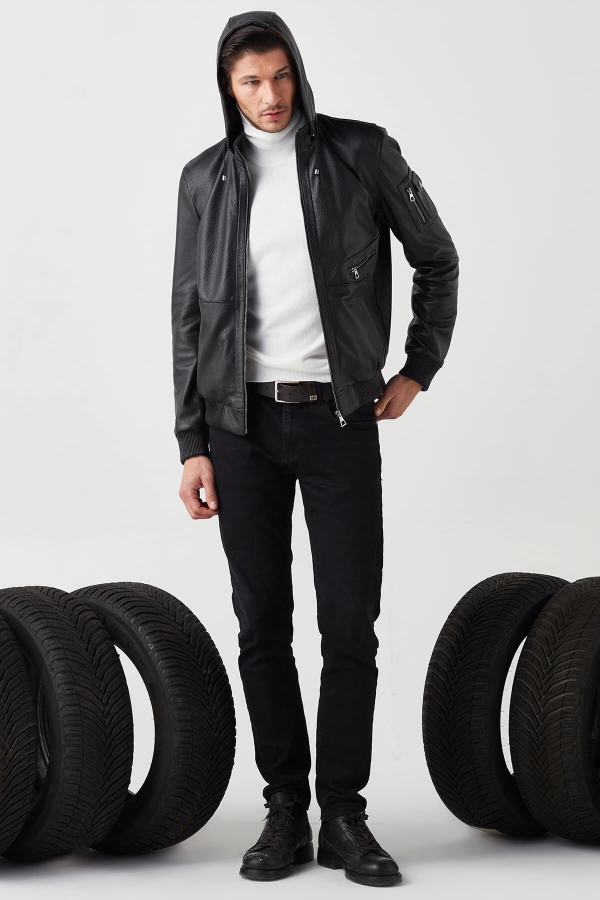
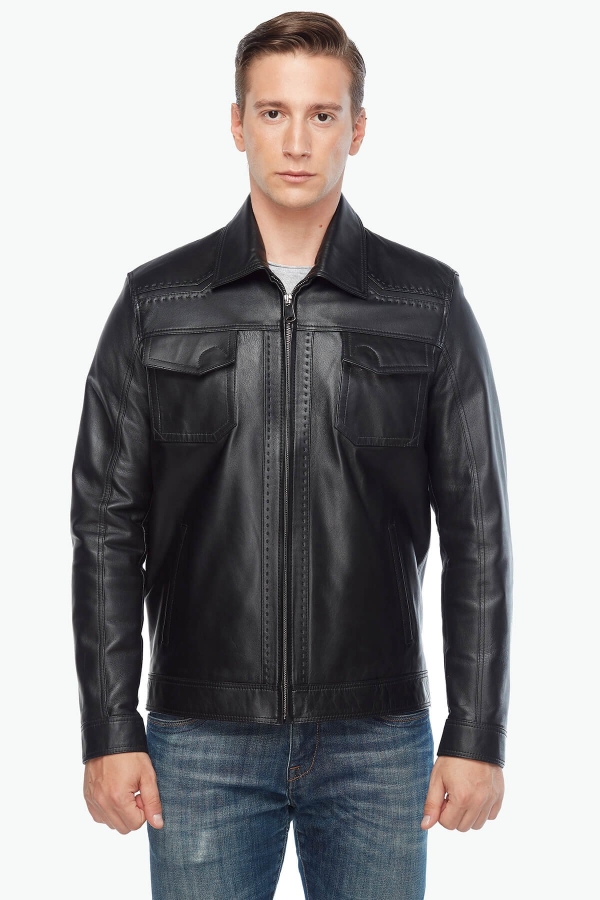
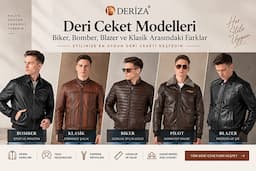
Men's leather jackets may be described as bomber, pilot, biker-inspired, classic, sporty, hooded or longer styles. These names can vary between brands, so the model name alone should not determine your choice.
Look at the actual cut, collar, length, shoulder and waist shape and intended use.
- Everyday city use: Freedom of movement and versatility may be priorities.
- Smart use: Cleaner surfaces, balanced proportions and restrained hardware may be preferable.
- Sporty use: Bomber, pilot or hooded designs may be suitable.
- Cold weather: Lining, insulation, collar, closure and length become more important.
6. Short or Long Men's Leather Jacket?
Garment length affects both styling and everyday comfort.
- Short styles: Can offer easier movement for everyday and car use.
- Standard length: Can provide a balance between mobility and body coverage.
- Longer styles: Cover more of the body, although sitting comfort and mobility should also be checked.
For longer outerwear, explore the Men's Leather Coat collection.
7. Check the Collar and Closure
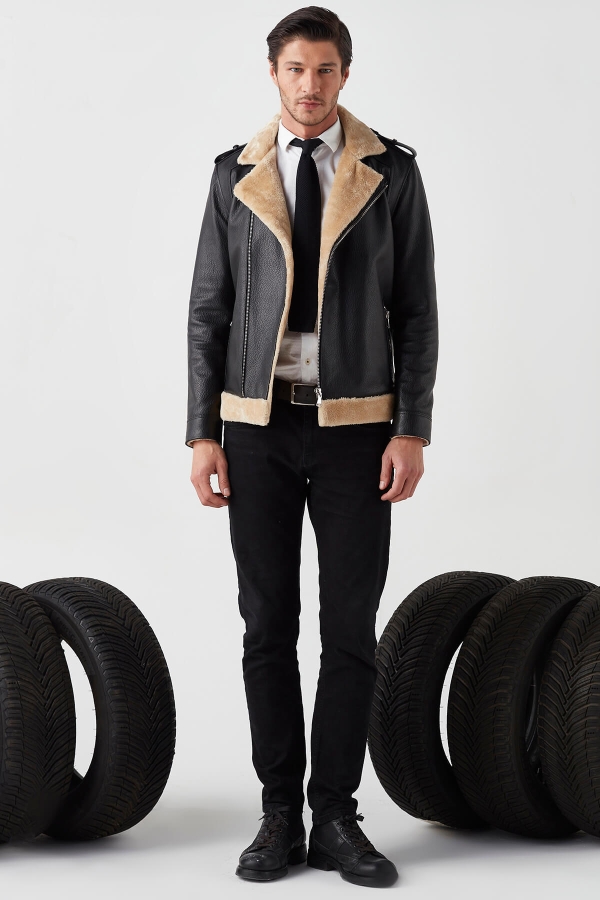
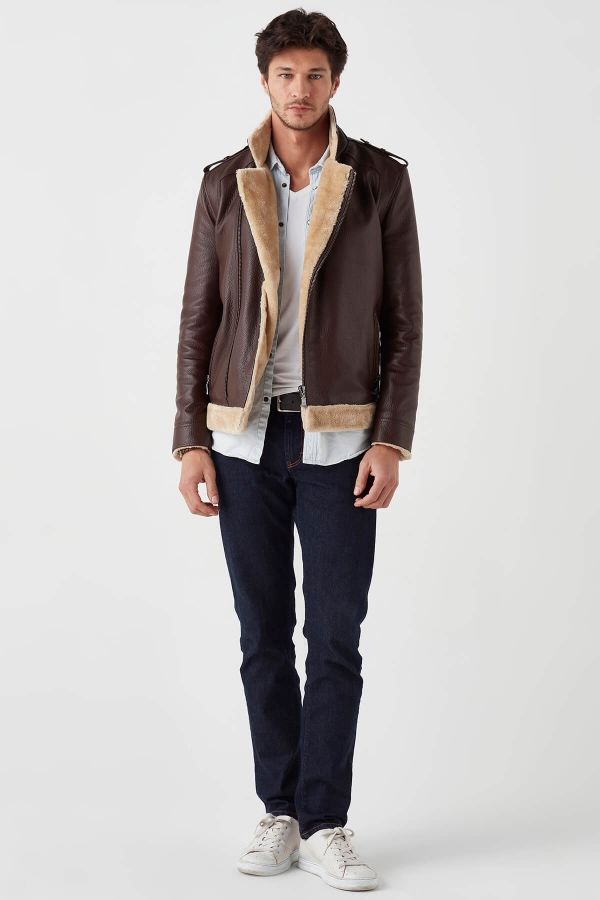
Stand collars, classic collars, fur-trimmed collars and hoods differ in more than appearance. Collar coverage and closure design can influence how the jacket feels in different weather conditions.
8. Inspect Stitching, Zippers and Hardware
Good leather alone does not guarantee a well-made jacket. Cutting, stitching, lining attachment, zippers and hardware must also be properly executed.
Pay particular attention to:
- shoulder seams,
- underarm areas,
- pocket openings,
- zipper areas,
- cuffs,
- lining attachment points.
Stitching should be consistent, loose threads should be absent and zippers should operate smoothly. Hardware attachment points should not show unnecessary pulling or obvious deformation.
9. What Should You Check When Buying a Men's Leather Jacket Online?
When shopping online, the quality of the product information becomes especially important. Do not rely only on photographs and a size selector.
- Leather type: Is the material clearly identified?
- Fit: Is the jacket described as slim, regular or another fit?
- Actual garment measurements: Are model-specific measurements available?
- Lining and insulation: Is the interior construction stated clearly?
- Length: Can you determine how much body coverage the jacket provides?
- Collar and closure: Are zipper, button, hood and collar details visible?
- Detail photographs: Can you inspect the leather surface, stitching, pockets and interior?
Deriza's product-specific measurements and Find My Size tool are designed to make comparison between different fits easier.
10. Is a Leather Jacket Different from a Leather Coat or Winter Jacket?
Product terminology can overlap. Instead of relying only on the product name, compare its actual length, interior construction, fit and intended season.
For lighter outerwear, explore Men's Leather Jackets.
11. Does a Men's Leather Jacket Keep You Warm in Winter?
Thermal comfort does not come from leather alone. Leather properties, lining, insulation, garment length, collar, closure and layering all contribute.
12. How Should Price and Quality Be Compared?
A higher price does not automatically guarantee higher quality, while a lower price does not automatically mean poor quality.
Factors that can influence the price of a leather jacket include:
- leather selection,
- amount of leather used,
- finishing characteristics,
- cut and construction,
- lining and insulation,
- zippers and hardware,
- workmanship,
- production and quality-control processes.
Men's Leather Jacket Buying Checklist
| Check | Question to Ask |
|---|---|
| Leather | What leather is used and is it appropriate for the intended use? |
| Fit | Is the jacket slim, regular or another cut? |
| Size | Do the actual garment measurements suit my measurements? |
| Lining / Insulation | Is the interior construction suitable for the intended season? |
| Stitching | Are seams and high-stress areas neatly constructed? |
| Zippers | Do they operate smoothly? |
| Style | Does the design match my everyday, smart, sporty or winter needs? |
| Price | Do the materials and construction justify the price? |
Frequently Asked Questions
What is the most important factor when buying a men's leather jacket?
There is no single factor. Leather, fit, size, lining, insulation, stitching, hardware and intended use should be evaluated together.
Is lamb leather suitable for men's leather jackets?
Lamb leather is widely used in leather garments because it can offer a relatively soft, lightweight and supple character. Overall quality still depends on leather selection, processing and garment construction.
Should a men's leather jacket fit tightly?
It may follow the body, but it should not unnecessarily restrict the shoulders, chest or arms. Layers worn underneath should also be considered.
Should I buy a leather jacket one size larger?
Not automatically. Fit, actual garment measurements, personal measurements and intended layering should determine the size.
How do I choose a leather jacket size online?
Compare your measurements with the actual measurements of the specific garment rather than relying only on the size label. Deriza's Find My Size feature can also assist with product-specific size selection.
Does a leather jacket keep you warm in winter?
Thermal comfort depends on the complete garment system, including leather, lining, insulation, length, collar, closure and layering.
Conclusion: How to Choose the Right Men's Leather Jacket
The right men's leather jacket should not be selected only by its “genuine leather” label or first appearance. Leather type, fit, actual garment measurements, lining, insulation, stitching, zippers and intended use should be considered together.
Explore the Men's Leather Jacket collection to compare different fits, collars, colours and styles.