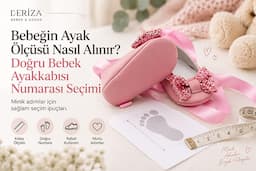

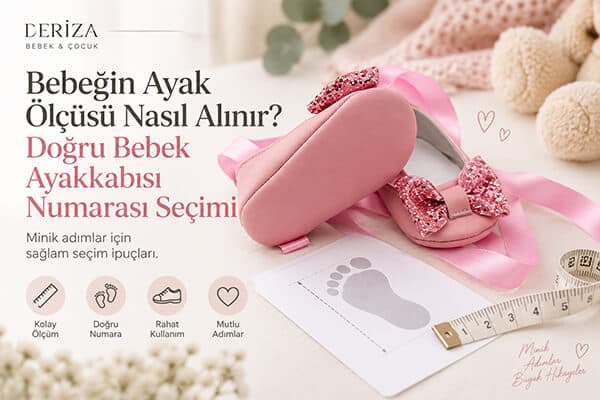
How to Measure Baby Feet and Choose the Right Shoe Size
Choosing baby shoes based only on age or a previously worn size can be misleading. Babies of the same age can have different foot lengths, while shoe sizing and fit may also vary between models.
A better starting point is to measure the baby's actual foot length and compare that measurement with the size information provided for the specific shoe.
This guide explains how to measure baby feet at home, why both feet should be measured separately and how to use the result when selecting a shoe size.
Why Measure a Baby's Foot in Centimetres?
Age-based shoe charts can provide a general reference, but age does not determine an exact shoe size. Foot length varies between babies, even within the same age group.
In addition, the same labelled shoe size does not necessarily correspond to exactly the same internal dimensions or fit in every model.
A more useful sequence is:
Actual foot measurement → model-specific measurement → intended use and shoe design → size choice
How Do You Measure a Baby's Foot at Home?
You only need a sheet of paper, a pen and a ruler or measuring tape.
1. Place the foot on a sheet of paper
Put the paper on a flat, firm surface and position the baby's foot as naturally as possible.
If the baby can stand with appropriate support, measuring with the foot naturally bearing weight may help provide a consistent result. If the baby is not standing yet, keep the foot in a natural position without forcing it.
2. Mark the back of the heel
Identify the furthest point at the back of the heel. Keep the foot relaxed without compressing the toes.
3. Find the longest toe
Do not automatically assume that the big toe is the longest point. Identify and mark whichever toe extends furthest.
4. Measure from heel to longest toe
Measure the distance between the back of the heel and the tip of the longest toe in centimetres or millimetres.
Rather than immediately converting the result into a universal shoe size, compare it with the measurement information for the specific model you intend to purchase.
Should You Measure Both Feet?
Yes. The right and left foot do not have to be exactly the same length.
Measure both separately and use the larger measurement as the main reference when evaluating shoe size.
For example, if one foot measures 11.7 cm and the other 11.9 cm, use 11.9 cm as your reference when comparing the foot with the product's sizing information.
Should Baby Feet Be Measured With Socks?
Consider how the shoes will normally be worn. If the model will usually be worn with socks, measuring with a similar thickness of sock can help reflect normal use.
This can be particularly relevant when thicker socks are expected.
Is Foot Length the Same as the Shoe's Internal Length?
No. These are different measurements.
- Foot length: the distance from the back of the heel to the longest toe.
- Product or internal measurement: a measurement associated with the construction and sizing of the specific shoe.
After measuring the foot, check the measurement or size chart provided for the particular product rather than assuming that a centimetre value always converts to the same universal size.
What Baby Shoe Size Should You Buy?
There is no single answer that works for every baby and every shoe.
Rules such as “always buy one size larger” or adding the same fixed amount of extra space for every child and every model can be misleading.
A more controlled approach is:
- Measure both feet.
- Record the larger measurement.
- Consider how the shoes will be worn.
- Check the specific model's measurement or size information.
- Compare the actual foot length with the product information.
- Consider the fit and closure design of the model.
Why Shouldn't Shoe Size Be Chosen by Age Alone?
Age is only a general reference. It does not tell you the baby's actual foot length.
Two babies of the same age can have different foot measurements, so an actual measurement provides a better starting point than an age-only estimate.
How Do You Choose a Size for First-Step Shoes?
The same basic principle applies: measure the actual foot first and then check the measurements provided for the selected model.
The term “first-step shoe” does not itself define a particular size or fit. The intended stage of use, design, closure and model-specific measurements should all be considered.
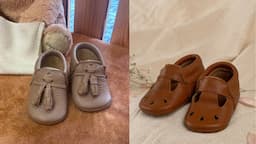
Is Measuring Different for Baby Moccasins?
A moccasin describes a design or shoe form; it does not determine the appropriate size by itself.
The baby's actual foot length should still be compared with the measurements of the specific moccasin model.
Why Is Size Checking Important for Personalised Baby Shoes?
When ordering a personalised product, both the personalisation details and the selected size should be checked carefully before ordering.
Measure the baby's feet first and then compare the result with the information supplied for the specific personalised model.
How Can You Tell if the Fit Needs to Be Rechecked?
After the shoe is put on, practical fit details should also be observed.
- Check whether the toes appear compressed at the front.
- Look for excessive pressure around the sides of the foot.
- Check whether the heel moves unexpectedly inside the shoe.
- Make sure the closure can be used without excessive tightness.
- Notice whether putting the shoe on or taking it off is unusually difficult.
These observations are not a medical assessment. They are practical reasons to recheck the size and fit of the product.
Common Baby Foot Measuring Mistakes
- Choosing a size based only on age.
- Measuring only one foot.
- Automatically treating the big toe as the longest point.
- Compressing the foot or bending the toes during measurement.
- Assuming that the same labelled size measures identically across models.
- Ignoring the product's own sizing information.
- Buying several sizes larger simply to extend the period of use.
Quick Measurement Guide
| Step | What to Do |
|---|---|
| 1 | Measure both feet separately. |
| 2 | Measure from the back of the heel to the longest toe. |
| 3 | Use the larger foot as the reference. |
| 4 | Consider whether the shoe will normally be worn with socks. |
| 5 | Check the specific product's measurement or size information. |
| 6 | Consider the model's fit and construction. |
Conclusion: Measure First, Choose the Size Second
The most useful starting point for choosing baby shoe size is the baby's actual foot measurement rather than age alone.
Measure both feet separately, use the larger measurement as your reference and compare it with the sizing information for the specific product. This provides a more model-specific basis for choosing a size than relying on a general age-to-size estimate.
Frequently Asked Questions
How do you measure a baby's foot?
Place the foot naturally on a flat sheet of paper and measure from the furthest point of the heel to the tip of the longest toe. Repeat for both feet.
How do you calculate a baby's shoe size?
Rather than using one universal conversion formula, compare the measured foot length with the size or measurement chart for the specific shoe model.
What if one foot is larger than the other?
Measure both feet and use the larger measurement as the reference when selecting the shoe.
Should baby shoes always be one size larger?
No universal “one size larger” rule applies to every baby and every shoe. Compare the actual foot measurement with the model-specific sizing information.
Can baby shoe size be selected by age?
Age can provide a general reference but does not determine an exact size. Babies of the same age can have different foot lengths.
Are moccasins and first-step shoes sized in the same way?
Actual foot length remains the starting reference for both, but model construction and measurements may differ, so the specific product information should also be checked.