

How to Choose Leather Slippers, Clogs and Children's Slippers?
Quick answer: When choosing slippers, do not rely only on appearance or descriptions such as “comfortable.” Intended use, upper material, sole construction, fit, actual product measurements and correct size should all be considered together.
Clogs generally differ from traditional open slippers with their more enclosed toe construction, while for children's slippers, actual foot measurements and the specific product's size chart are more useful than age alone.

Slippers are among the most practical forms of everyday footwear. However, leather slippers, clogs and children's slippers do not necessarily serve the same needs.
The required construction may vary depending on whether the product will be used at home, in the garden, for everyday outdoor use or by a child.
For this reason, the first step in choosing the right slippers is to determine where and how they will be used.
What Is the Difference Between Leather Slippers and Clogs?
| Type | Basic Construction | What to Check |
|---|---|---|
| Leather Slippers | May feature open designs or different strap constructions | Upper leather, strap placement, sole and fit |
| Clogs | Generally a closed toe with an open or partially open back | Toe volume, fit, sole and upper material |
| Cork-Sole Slippers | A sole or footbed construction containing cork | Sole construction and actual material information |
| Children's Slippers | A product last designed for children's feet | Actual foot length, internal product length and size chart |
Words such as “clog,” “cork” or “leather” in a product name do not by themselves explain all of the product's technical characteristics. The actual materials and construction should be checked for each model.
1. What Should You Consider When Choosing Leather Slippers?

When choosing leather slippers, first check the upper material, sole construction, fit and actual sizing information.
Genuine leather is a natural and variable material. However, the phrase “genuine leather” alone does not describe the complete quality level of a product.
Along with leather type and surface finish, cutting, stitching, strap attachments, lining or inner surface, sole construction and overall workmanship should also be considered.
2. What Are Clogs?

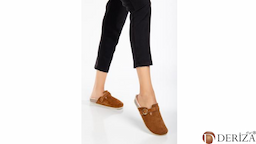
A clog is generally a slipper or shoe form with a more enclosed front section and an open or partially open back.
This construction can provide a different wearing experience and appearance from traditional open-strap slippers.
When choosing clogs, consider more than the labelled size. Toe volume, the position of the foot inside the product, fit, sole construction and upper material should also be evaluated.
3. Can Clogs Be Worn Every Day?
The answer depends on the construction of the product and the conditions in which it will be used.
Whether a particular clog is suitable for everyday use should be evaluated according to its sole, upper material, fit, the surface on which it will be worn and the individual user's requirements.
General statements such as “clogs make standing for long periods easier” or “all clogs are anatomical” are not appropriate.
If a product is described as anatomical or as having another specific construction, that feature should be verified for the individual model.
4. Suede or Smooth-Finished Leather?
Different surface characteristics may be used in leather slippers and clogs.
Suede has a fibrous, more matte surface and requires different care from smooth-finished leather.
Smooth-finished leather may have different surface characteristics depending on the finish applied.
Neither is automatically higher quality than the other. The choice should be based on intended use and preferred surface characteristics.
Leather Engineer's Note: Appearance Alone Does Not Determine Leather Quality
When evaluating the leather used in slippers, softness, shine or surface texture alone are not sufficient.
Raw hide quality, fibre structure, tanning, fatliquoring, thickness, finishing and product construction all influence the characteristics of the finished product.
Two slippers made from the same type of leather may behave differently in use because of differences in sole construction and manufacturing methods.
5. Why Is Sole Construction Important in Slippers?
The outsole is the part of the slipper that comes directly into contact with the ground. For this reason, it is one of the key components to examine when considering where the product will be used.
Products may use rubber, polyurethane, cork-containing constructions and various synthetic or natural components.
However, the name of the sole material alone should not be used to conclude that a product is “healthier” or “higher quality.”
The sole construction, thickness, flexibility, attachment to the upper and intended use should be considered together.
6. What Are Cork-Sole Clogs?
The term “cork sole” may indicate that cork or a cork-containing layer is used within the sole or footbed construction.
However, not every product marketed as a “cork slipper” has the same material composition or sole construction.
For this reason, the entire construction should not be assumed from the word “cork” in the product name. Check the technical information for the individual product.
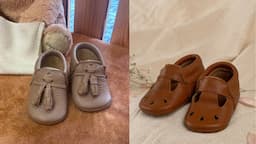
7. What Should You Consider When Choosing Children's Slippers?
Correct sizing is one of the most important considerations when choosing children's slippers.
Selecting footwear size based only on age is not reliable. Two children of the same age may have different foot lengths and foot shapes.
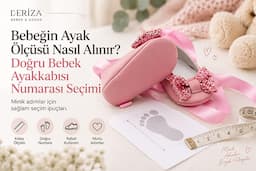
Whenever possible, measure the child's actual foot length and compare it with the size chart for the specific product.
The product's fit, internal length, forefoot width and any adjustable strap or fastening system should also be checked.
How Much Growing Room Should Children's Slippers Have?
There is no single fixed centimetre allowance that is appropriate for every children's slipper.
Suitable additional space can vary according to the product last, toe construction, intended use and the manufacturer's sizing system.
Instead of applying one universal growth allowance, use the measurements and size guidance provided for the specific model.
What Do “Orthopaedic” and “Anatomical” Mean for Children's Slippers?
If these terms appear in a product description, the actual structural features behind the claim should be checked.
A product does not automatically become orthopaedic simply because it is a slipper, made from leather or has a cork-containing sole.
If a child has an individual foot, walking or other health-related concern that requires medical assessment, general product descriptions should not be used as a substitute for advice from an appropriate healthcare professional.
8. How Should You Choose Slipper Size?
Actual product measurements are important alongside the labelled size.
When choosing online, where possible:
- Measure the foot length.
- Measure both feet.
- Use the specific product's size chart.
- Check whether the product is described as having a narrow, regular or wide fit.
- Do not rely only on the size worn in another brand.
The same labelled size does not necessarily mean the same internal measurement or the same fit across different models.
9. Can the Same Slippers Be Used Indoors, in the Garden and Outdoors?
Not every slipper is designed for every environment.
The sole and upper characteristics required for indoor use may differ from those needed for outdoor surfaces.
For garden or outdoor use, check the outsole, the care requirements of the upper and whether the product is suitable for the intended environment.
Certain surfaces, including some suede finishes, may require more careful use and maintenance when exposed to moisture and dirt.
10. How Should Leather Slippers Be Cared For?

The appropriate care method depends on the leather type, finish and sole construction.
- Do not leave the product near intense heat sources for long periods.
- If it becomes wet, do not dry it with direct high heat.
- Do not apply random oils or household cleaning products.
- Do not automatically use products designed for smooth leather on suede surfaces.
- If using a care product, test it first on a small, inconspicuous area.
- Follow the manufacturer's care instructions where provided.
Leather Slipper and Clog Buying Checklist
Frequently Asked Questions About Leather Slippers, Clogs and Children's Slippers
What are clogs?
Clogs generally have a closed or more enclosed front with an open or partially open back. Exact construction can vary by model.
Are leather clogs comfortable?
Comfort depends on both the individual and the product. Fit, size, toe volume, sole, upper material and duration of use may all affect comfort. Being made from leather or having a clog design does not by itself guarantee comfort.
Are cork-sole slippers better?
The use of cork alone does not automatically make a product higher quality or suitable for everyone. The complete sole construction and intended use should be evaluated together.
Should children's slipper size be chosen according to age?
No. Age can only provide a very general reference. Measure the child's actual foot length and compare it with the size chart for the specific product.
Should children's slippers be orthopaedic?
The term “orthopaedic” should not be treated simply as a general marketing label. The actual features of the product should be checked. If there is an individual health or foot-related concern, an appropriate healthcare professional should provide the relevant assessment.
Are suede leather slippers waterproof?
Water resistance depends on the specific finish and treatment. Not all suede products should be assumed to be waterproof. Check the care and usage instructions for the individual product.
Conclusion: Choose Slippers According to Intended Use and Actual Measurements
Leather slippers, clogs and children's slippers may have different constructions for different uses.
When choosing the right product, consider not only design and colour, but also the upper material, sole, fit, size, actual foot measurements and intended environment.
Especially for children's products, using actual foot measurements and the specific product's size chart is more reliable than estimating size from age alone.
Choose Slippers That Suit Your Needs
Once you have determined the intended use, compare the leather, sole construction, fit and actual measurements to evaluate the most suitable option for yourself or your child.