






Children’s Leather Sandals and Clog Sandals
Quick summary: The Deriza children’s leather sandal collection includes genuine leather styles for everyday and summer wear. Product features vary by style; current listings may include clog designs, suede leather finishes and cork soles. When choosing a pair, consider your child’s current foot length and width, heel and toe placement on the footbed, how the sandal fits and where it will be worn.
Children’s leather sandals are open footwear options that can hold the foot at more points than a slipper, depending on their design. Some clog sandals are easy to put on and take off. Closure and heel construction can differ, so check the product description and images for each style.
When choosing sandals, look beyond the size label. Check how the foot sits on the footbed and how securely the upper holds it. Neither the heel nor the toes should extend beyond the sole, and the sandal should not move excessively as your child walks.
What to Look for in Children’s Leather Sandals
- Foot length: Use your child’s current measurements rather than age or an old shoe size.
- Measure both feet: If one foot is longer, use that measurement as your guide.
- Foot width: Feet of the same length may differ in width and instep height.
- Heel and toes: They should stay within the footbed without leaving excessive empty space.
- Upper and closure: They should hold the foot without creating noticeable pressure or discomfort.
- Sole: Check the product page for the sole material and construction, then consider where the sandal will be worn.
- Activity: For parks, outings and active use, consider how securely the style holds the foot.
- Surface: Use care on wet or slippery surfaces with any sandal.
Genuine Leather and Suede Leather
The Deriza children’s sandal collection includes genuine leather styles. Leather finish and surface texture may vary; some products may have a suede finish. Check the individual product page to confirm the animal origin, surface, lining and sole details for the specific style you plan to order.
The words “genuine leather” alone do not describe every feature of a sandal. Consider the leather surface, strap placement, stitching and edge finishing, sole construction, closure and fit together.
A Leather-Engineering Approach to Children’s Sandals
Deriza founder Recep Aycan graduated in Leather Engineering from Ege University. This technical background informs an approach that considers the material, leather thickness and surface, strap placement, sole construction and everyday use together when evaluating children’s sandals.
Because sandals are open footwear, the relationship between the foot, footbed and straps matters. Straps that are too tight can create pressure; loose straps may allow the foot to move excessively. Look beyond a general “soft leather” description and check how the specific style fits your child.
Children’s Leather Sandal and Clog Styles
Children’s Clog Sandals
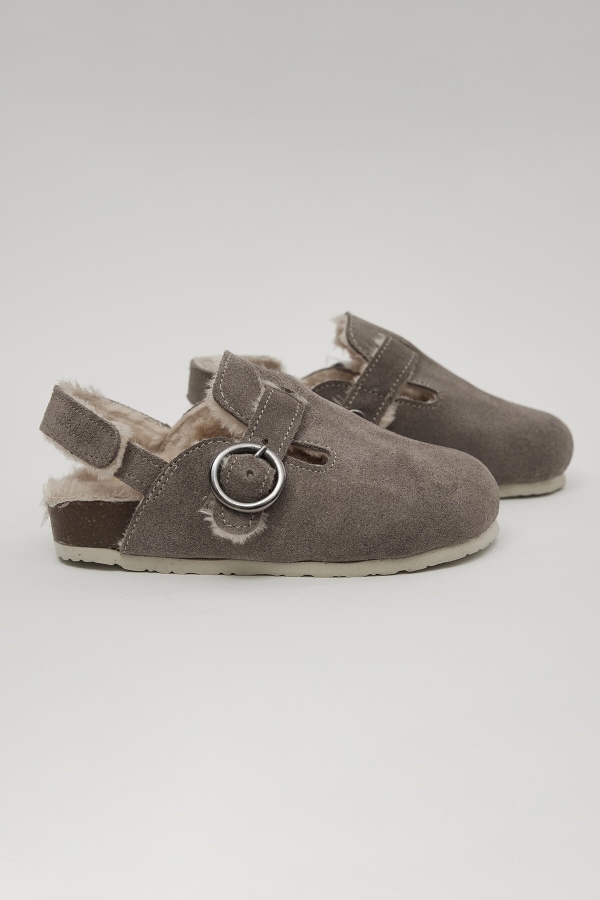
Depending on the style, clog sandals may have a more covered front and an open or differently designed heel. Upper material, heel structure and sole details may vary across the collection. Check the product page for the features of each model.
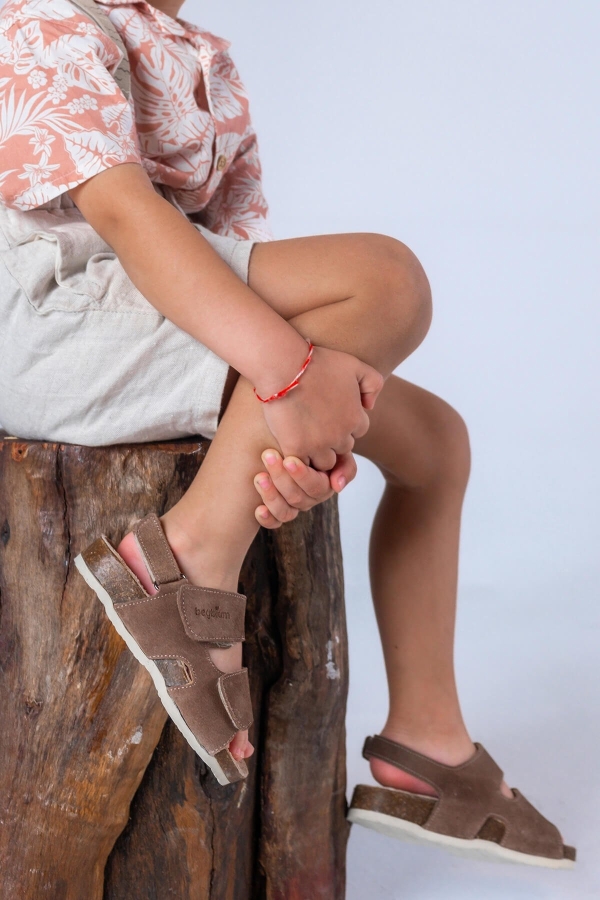
Suede Leather Children’s Sandals
Suede is a type of leather with a distinct surface texture. Care for suede may differ from care for smooth leather. Follow the instructions provided for the specific product.
Children’s Sandals with Cork Soles
Cork soles are a feature of some styles. Sole materials and designs can vary, so use the product description as your reference. A cork sole alone does not mean that a sandal is non-slip or orthopedic.
How to Choose the Right Size
- Measure both of your child’s feet on a flat surface, preferably while standing.
- Measure from the back of the heel to the tip of the longest toe.
- If the feet differ in length, use the longer measurement.
- Compare it with the size chart or footbed length for the specific product.
- After trying the sandals on, check the heel, toes and sides of the foot against the footbed.
Sizing can vary between styles. Do not assume your child’s usual shoe size will automatically fit a sandal. Check the measurements listed for the product.
Should You Buy Children’s Sandals One Size Larger?
There is no universal rule to buy every child’s sandal one size larger. A sandal that is too big may shift on the foot, allow the heel to move out of the back strap or make it harder for your child to walk comfortably.
If the heel or toes extend beyond the footbed, the sandal may be too small. If there is too much space at the front or back, or the straps do not hold the foot securely, reassess the size and fit. Room for growth should not make the sandal unstable on the foot.
How Should a Children’s Sandal Fit?
- The heel and toes stay within the footbed.
- The foot does not slide excessively on the footbed while walking.
- The upper or straps do not cause noticeable pressure or redness.
- If the sandal has a back section, it does not repeatedly slip off during normal walking.
- Your child can take normal steps comfortably.
These checks help you assess size and fit. They do not replace a medical evaluation of the foot.
Are Children’s Sandals Suitable for Parks, Outings and Everyday Wear?
Suitability depends on how securely the style holds the foot, its sole construction, the surface and your child’s activity level. A sandal selected for short everyday walks may not be the best choice for running or extended active play. Consider the intended setting together with the design of the individual product.
Genuine leather sandals are not designed as water shoes for swimming or pool use. Salt water, chlorinated water and repeated soaking can damage the leather, straps and sole connection. Take care on wet tiles, pool edges and slippery stone. No sole should be assumed to prevent slipping on every surface.
Children’s Sandals or Slippers?
Depending on the design, sandals may hold the foot at the front, heel or sides. Slippers are generally more open and easier to put on and take off. For longer walks or more active use, consider a style that secures the foot more effectively.
For more open styles that are easy to slip on, explore the children’s leather slippers collection.
How to Clean Children’s Leather Sandals
- First check the material and care instructions on the product page.
- Do not machine-wash genuine leather or suede leather sandals or submerge them in water.
- Gently remove surface dirt with a soft brush suited to the material or a lightly damp cloth.
- Do not apply cologne, alcohol or strong cleaners directly to the leather.
- If the sandals get wet, let them dry naturally at room temperature, away from heaters, hair dryers and intense direct sunlight.
- Test any care product on a small, hidden area first.
What Affects the Price of Children’s Leather Sandals?
Prices may vary according to the type and finish of leather, sole material, design, components and accessories, closure system and manufacturing workmanship. When comparing products, look beyond the “genuine leather” label and check the material details, size options, sole construction and suitability for your intended use.
Children’s Leather Sandal Buying Checklist
- Measure both feet and use the longer foot as your guide.
- Check the size chart and footbed measurements for the specific product.
- Make sure the heel and toes stay within the footbed.
- Check that the sandal does not move excessively as your child walks.
- Confirm the leather finish, sole material and closure details on the product page.
- Consider the intended surface and your child’s activity level.
- Avoid buying a sandal that is too large “to grow into” or too tight because “leather will stretch.”
- Do not use leather sandals as water shoes for pools or the sea.
Related Children’s and Baby Footwear
For more open styles that are easy to put on and take off, browse children’s leather slippers.
For colder weather, explore kids’ leather boots.
For babies beginning to walk, see genuine leather first-step shoes. Other options are available in the leather baby shoes collection.
Browse all children’s and baby products in the children and baby category.
Frequently Asked Questions About Children’s Leather Sandals
How do I choose the right size?
Measure both feet, use the longer foot as your guide and compare the measurement with the size chart or footbed length for the specific style.
Should children’s sandals be bought one size larger?
Not automatically. An oversized sandal may shift on the foot. Check the product measurements and how the foot sits in the sandal.
What is a children’s clog sandal?
Depending on the style, it may have a more covered front and an open or differently designed heel. Features vary by product.
Are cork-soled children’s sandals non-slip?
Grip depends on the sole material, tread and surface. Cork alone does not guarantee non-slip performance. Use care on wet or slippery floors.
Can children wear leather sandals in a pool or at the beach?
Genuine leather sandals are not water shoes. Salt or chlorinated water and repeated soaking can damage the leather and sole connection.
Should sandal straps be tight?
The sandal should hold the foot without creating noticeable pressure or discomfort. If the foot moves excessively while walking, reassess the fit.
How do I clean children’s leather sandals?
Follow the care instructions for the product. In general, do not machine-wash or soak leather sandals, and let them dry naturally away from heat.
Are children’s leather sandals orthopedic?
A sandal should not be described as orthopedic solely because it is made of leather or has a particular sole. For medical needs, follow advice from a healthcare professional.