
Genuine Leather Jacket vs Faux Leather Jacket: What Are the Differences?
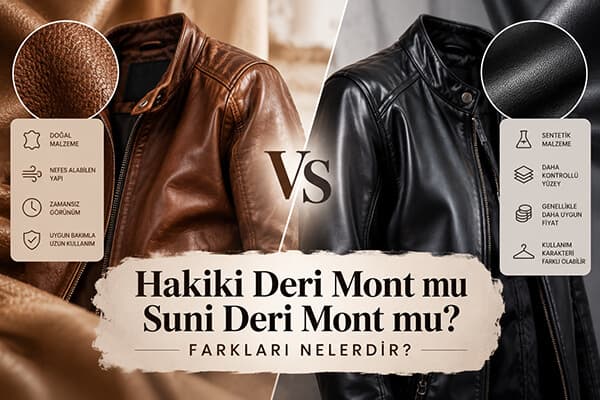
Quick answer: The main difference between a genuine leather jacket and a faux leather jacket is the structure of the material. Genuine leather is made from natural animal hide that is tanned and finished for use in clothing. Faux leather refers to synthetic-based materials designed to create a leather-like appearance. However, deciding which jacket is more suitable for you should not depend only on whether it is genuine or faux leather. The fit, lining, insulation if present, surface finish, workmanship, care requirements, intended use and price should all be considered together.
One of the most common questions when buying a leather jacket is genuine leather or faux leather? Although the two may sometimes look similar at first glance, their material structure, production methods, usage characteristics and care requirements can differ.
It is important not to automatically classify genuine leather as “good” and faux leather as “bad.” Even two jackets within the same material category can differ considerably depending on material quality, construction, lining, stitching, hardware, finishing and manufacturing quality.
For this reason, a more useful comparison considers material structure + garment construction + intended use + care + price rather than the material name alone.
What Is the Main Difference Between Genuine Leather and Faux Leather Jackets?
The most fundamental difference is the source and structure of the material.
A genuine leather jacket is made from natural animal hide that has undergone tanning, dyeing, fatliquoring and various finishing processes before being manufactured into outerwear.
A faux leather jacket uses synthetic-based materials designed to create a leather-like appearance and surface. Faux leather is not one single material; its production method, backing structure and surface coating can vary between products.
| Feature | Genuine Leather Jacket | Faux Leather Jacket |
|---|---|---|
| Basic material | Processed natural animal hide | Synthetic-based leather-like material |
| Internal structure | Has a natural three-dimensional fiber structure | May contain different layers such as a textile backing and polymer surface, depending on the material |
| Surface | Varies according to the natural structure and applied finish | Different colors, patterns and surface textures can be created during production |
| Natural surface variations | Grain, pores, texture and slight tonal variations may occur | More controlled and repeatable surfaces can be produced |
| Care | Requires care appropriate for the leather type and finish | Care depends on the specific synthetic material |
| Price | Generally has a different cost structure because of the raw material and processing requirements | Can be available at different price levels depending on material and manufacturing quality |
| Service life | Not fixed; depends on the leather, manufacturing, use, care and storage | Not fixed; depends on material quality, manufacturing, use and storage |
What Is the Structure of a Genuine Leather Jacket?
Genuine leather has a natural fiber structure. Raw hide cannot be used directly for clothing; tanning and subsequent processes stabilize the material and give it characteristics suitable for its intended use.
In leather garments, the final result is not determined by animal type alone. Leather selection, fiber structure, thickness, tanning system, fatliquoring, dyeing and finishing can all influence the feel and performance of the garment.
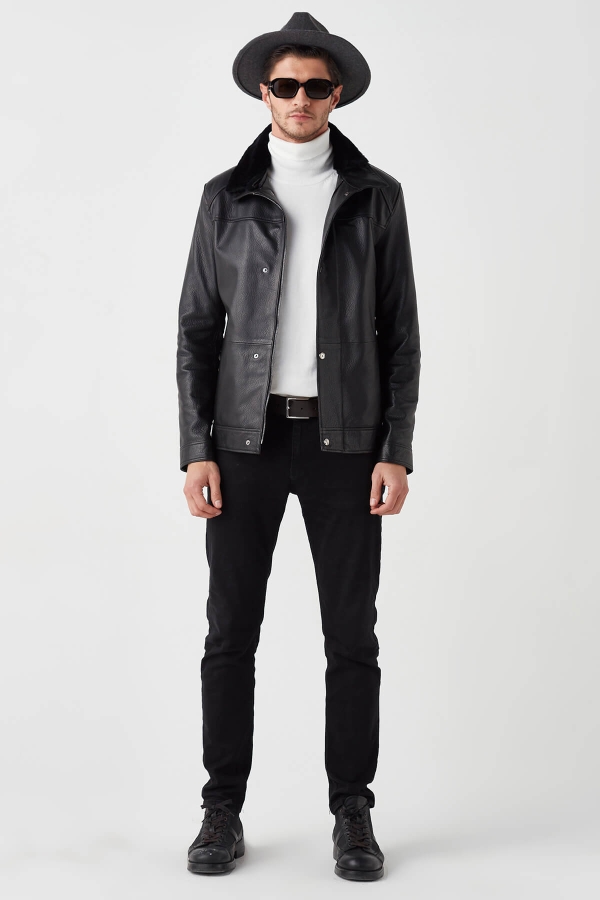
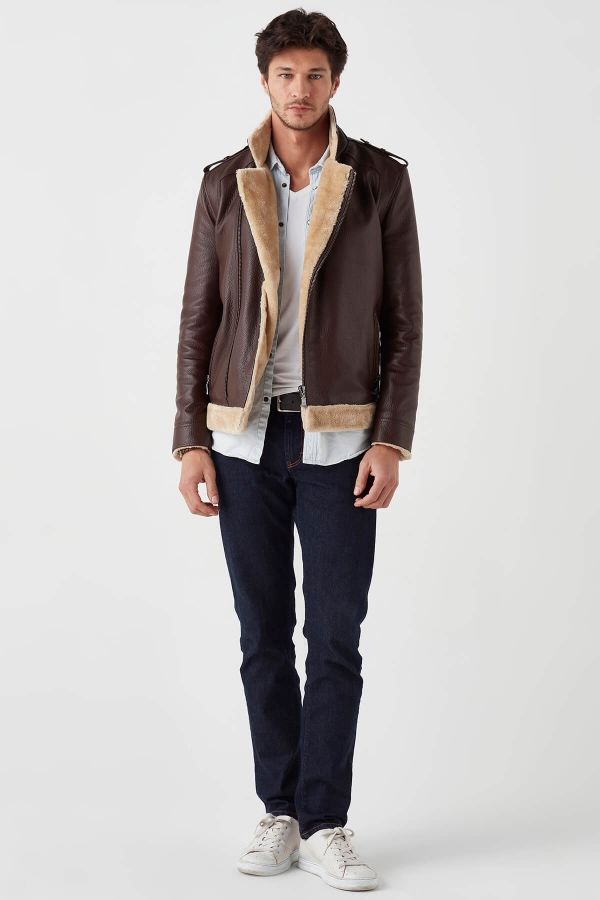
Deriza leather garments, including leather jackets and coats, primarily use genuine lambskin leather. Lambskin can be suitable for outerwear because of its relatively soft, lightweight and supple character.
However, the terms “lambskin” or “genuine leather” alone do not describe the overall quality of a jacket. Fit, cutting, panel placement, lining, stitching, zippers, hardware and overall construction should also be considered.
What Is the Structure of a Faux Leather Jacket?
Faux leather is a general term for materials designed to create a leather-like appearance without using natural animal leather.
Depending on the product, different polymers, textile backing structures, coatings and surface treatments may be used. Therefore, it is not accurate to place every type of faux leather into a single quality or performance category.
Modern production methods can create surfaces that closely resemble natural leather. For this reason, a product photograph or a uniform surface alone is not a reliable way to determine whether a jacket is genuine or faux leather.
How Do Genuine and Faux Leather Differ in Appearance?
Natural leather may display variations in grain, pores, texture and tone. However, finishing treatments can reduce, alter or make these natural characteristics more uniform.
With faux leather, leather-like patterns and textures can be created during manufacturing.
Therefore:
- A very uniform surface does not automatically prove that a product is faux leather.
- Visible pores alone do not prove that a product is genuine leather.
- A leather-like texture does not necessarily mean that the material is natural leather.
Material information, manufacturing details and multiple characteristics should be evaluated together when determining whether a product is genuine leather.
Is Smell Enough to Distinguish Genuine Leather from Faux Leather?
No. Smell may provide an additional clue, but it is not a reliable method on its own.
The smell of genuine leather can be affected by tanning, dyeing, finishing, storage and processing chemicals. Synthetic materials can also have different odors depending on their manufacturing process.
Therefore, a product should not be identified as genuine leather simply because it “smells like leather.”
Can You Identify Genuine Leather with a Fire Test?
Using a flame or lighter to determine whether a jacket is genuine leather is not recommended.
Fire can permanently damage the leather, finish, dye, stitching and other garment components, and it can also create a safety risk.
Product labeling, clear material information, manufacturer information and multiple characteristics of the material should be evaluated together instead.
Is a Genuine Leather Jacket More Durable?
This question cannot accurately be answered with a simple “yes” or “no.”
The performance of genuine leather depends on factors such as the quality and structure of the leather, thickness, tanning and finishing processes, garment construction, stitching and hardware, frequency of use, maintenance and storage conditions.
The performance of faux leather can likewise vary according to the structure of the synthetic material and the manufacturing quality of the product.
Therefore, fixed statements such as “genuine leather lasts a lifetime” or “faux leather always peels quickly” are not accurate.
Does a Genuine Leather Jacket Breathe?
Natural leather can have hygroscopic properties, meaning that it can interact with moisture in its environment. However, this does not mean that a leather jacket will automatically prevent sweating.
Comfort is also influenced by the lining, insulation if present, fit, garment openings, layers worn underneath, temperature and level of physical activity.
For this reason, claims such as “genuine leather breathes and never makes you sweat” should be avoided. The complete construction of the garment needs to be considered.
Is a Genuine Leather Jacket Waterproof?
Being made from genuine leather does not automatically make a jacket waterproof.
The way leather responds to water depends on the leather type, finish and any protective treatment applied to the surface. Prolonged or heavy exposure to water may negatively affect natural leather.
Genuine leather jackets should therefore be protected from heavy rain and, if they become wet, allowed to dry naturally without using high-heat sources.
Which Is Warmer: Genuine Leather or Faux Leather?
The outer material alone does not determine how warm a jacket will be.
The lining, insulation if present, garment length, collar design, zipper or button closure, cuffs, fit and clothing layers worn underneath all contribute to thermal comfort.
Therefore, the fact that one jacket is made from genuine leather does not automatically mean that it will be warmer than another jacket.
Why Can Genuine Leather Jackets Cost More Than Faux Leather Jackets?
Natural leather and synthetic-based materials have different raw material, processing and manufacturing requirements. These differences can affect production costs.
In genuine leather garments, selecting, processing, grading and cutting natural hides while accounting for natural surface variations are all part of the production process.
However, the outer material is not the only factor that affects price. Other factors include:
- The quality of the leather or synthetic material
- The amount of material used
- Garment design and panel construction
- Lining and insulation, if present
- Zippers, buttons and other hardware
- Stitching and edge workmanship
- Manufacturing method and level of workmanship
For this reason, a higher price alone is not proof that a product is genuine leather or that it is higher quality.
Is the Care of Genuine and Faux Leather Jackets the Same?
No. Because their material structures differ, their care methods should not be assumed to be the same.
For genuine leather jackets, cleaning and care should be appropriate for the specific leather type and finish. Random oils, harsh chemicals, high heat and machine washing are not appropriate general care methods for natural leather.
For faux leather garments, the manufacturer's cleaning and care instructions for the specific material should be followed.
In either case, testing a suitable product on a small, inconspicuous area and following the manufacturer's care instructions is the safer approach.
Is a Genuine Leather Jacket Worth Buying?
The answer depends on your expectations and intended use.
If you prefer natural leather, its characteristic surface and a garment that requires material-specific care, a genuine leather jacket may suit your expectations.
However, you should not make a purchase decision based only on the words “genuine leather.” Check the actual characteristics of the garment, including:
- Leather type
- Fit and size
- Garment length
- Lining
- Insulation, if present
- Collar and closure system
- Zippers and hardware
- Stitching and overall workmanship
- Intended use
Genuine Leather or Faux Leather: Which One Should You Consider?
| Your Priority | Option to Consider |
|---|---|
| Using a natural leather material | Genuine leather jacket |
| Natural leather surface character | Genuine leather jacket |
| Traditional natural material for leather garments | Genuine leather jacket |
| Avoiding animal leather | Suitable synthetic alternatives with verified material information |
| Lower initial budget | Faux leather options may be considered depending on the product |
| A specific color or surface appearance | Compare individual products in both material groups |
| Cold-weather use | Consider lining, insulation, length and closure construction together rather than the outer material alone |
The aim is not to declare one material universally “better,” but to match the product structure with your expectations and intended use.
What Type of Leather Does Deriza Use for Leather Jackets?
Deriza leather garments and leather jacket collections primarily use genuine lambskin leather.
However, at Deriza, choosing a jacket is not reduced to the statement “genuine lambskin.” To understand how a particular model is likely to suit your needs, its fit, garment length, lining, insulation if present, collar, closure system and intended conditions of use should be considered together.
Genuine vs Faux Leather Jacket Checklist
Frequently Asked Questions About Genuine and Faux Leather Jackets
What is the main difference between genuine and faux leather jackets?
The fundamental difference is the material structure. Genuine leather is produced from processed natural animal hide. Faux leather refers to synthetic-based materials designed to create a leather-like appearance.
Is genuine leather always higher quality than faux leather?
No. The overall quality of a garment cannot be determined from the term “genuine leather” alone. Leather quality, finishing, fit, stitching, lining, hardware and overall manufacturing quality should all be considered. Faux leather products can also vary considerably in material and manufacturing quality.
Does faux leather always peel?
No. The performance of faux leather varies according to the material structure, coating, manufacturing quality, conditions of use and storage. A fixed peeling period cannot be applied to all faux leather products.
Does a genuine leather jacket last a lifetime?
There is no fixed service life that applies to every genuine leather jacket. Longevity depends on the leather structure, manufacturing quality, frequency of use, maintenance, storage and environmental conditions.
Is genuine leather waterproof?
No. Genuine leather does not automatically make a jacket waterproof. Water resistance varies according to leather type and finish, and prolonged exposure to water should generally be avoided.
Can you identify genuine leather by smell?
Smell alone is not sufficient. Tanning, finishing, manufacturing and storage can affect the odor of a product. Material information and multiple characteristics should be evaluated together.
Is genuine leather warmer than faux leather?
This cannot be determined from the outer material alone. Lining, insulation, garment length, collar, closure system, fit, layers worn underneath and weather conditions all affect thermal comfort.
Why can genuine leather jackets be more expensive?
Processing, selecting and preparing natural leather involves a different production structure from synthetic materials. The final price is also influenced by the amount of material, garment design, lining, insulation, hardware, workmanship and other production factors.
How can you tell if a leather jacket is genuine?
Instead of relying on a single home test, consider the material description, manufacturer information and several characteristics of the material together. Fire testing is not recommended, and smell, pores or water behavior alone are not definitive proof.
Conclusion: Choose Between Genuine and Faux Leather According to Your Needs
The fundamental difference between genuine and faux leather jackets begins with their material structure, but choosing the right garment involves more than that.
Material → fit → lining and insulation → garment construction → intended use → care → price should be evaluated together.
If you prefer genuine leather, look beyond the “genuine leather” label and examine the actual leather type and garment specifications. If you are considering faux leather, remember that material composition and manufacturing characteristics can vary considerably between products.
Explore Deriza Genuine Leather Jackets
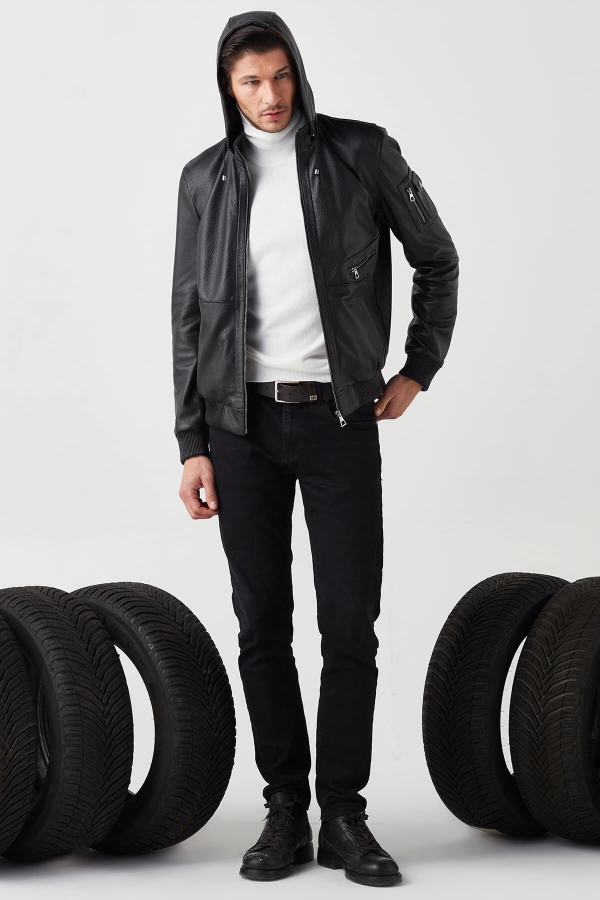
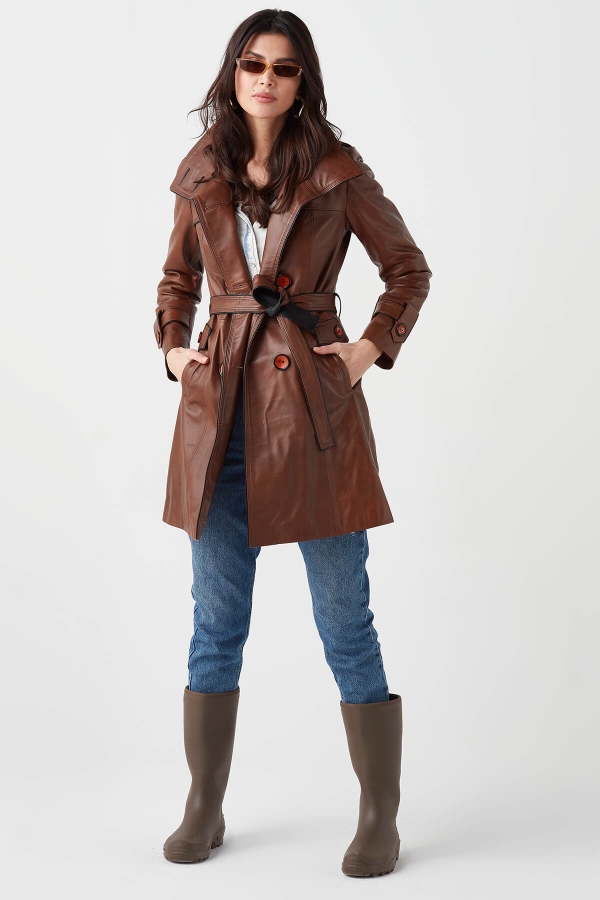
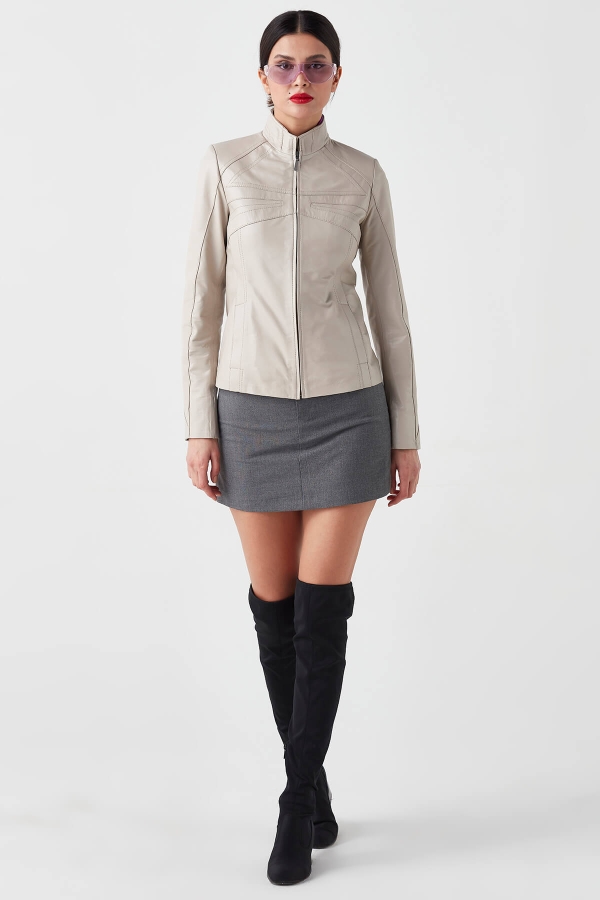
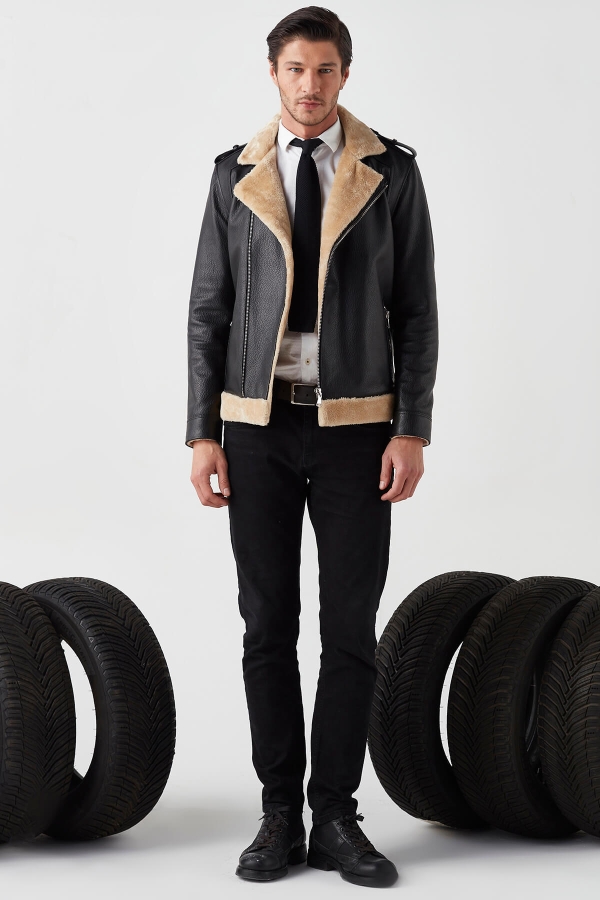
After considering the material differences and your intended use, you can compare Deriza genuine leather jacket styles according to fit, design, lining, insulation and other product-specific features.


.jpg&w=256&q=75)