.jpg&w=828&q=75)
Leather Guide: Genuine Leather Types and Characteristics
Genuine leather is not a single, uniform material. Animal type, the natural structure of the hide, fibre structure, thickness, tanning, fatliquoring and finishing processes can all influence the softness, handle, weight, flexibility and overall performance of the finished leather.
For this reason, when evaluating a leather product, it is not enough to look only for the words “genuine leather”. It is also important to consider which leather type has been selected for which product and intended use.
In this guide, we explain the key characteristics of lamb leather, cowhide and buffalo leather, their common uses, terms such as full-grain and top-grain, the natural surface characteristics of leather and the main criteria for choosing the right leather for a product.
In Brief: Which Leather Is Used for Which Products?
| Leather Type | General Characteristics | Common Uses |
|---|---|---|
| Lamb Leather | Can be relatively lightweight, soft, supple and drapable. | Leather jackets, coats, trench coats, vests and other leather apparel |
| Cowhide | Can be firmer, more structured and suitable for different surface characteristics depending on processing. | Wallets, card holders, bags and other leather goods; some leather apparel |
| Buffalo Leather | Can have a thick, firm and structured character. | Especially belts and other structured leather products |
This table shows general usage tendencies. Even the same leather type can have very different physical properties depending on thickness, tanning and finishing.
The right leather depends on the intended use of the product. The lightness and freedom of movement expected from a leather jacket are not the same as the structural properties required from an everyday wallet or belt.
What Is Genuine Leather?
Genuine leather is produced by tanning animal hide to make it more resistant to deterioration and suitable for use. Depending on the intended product, the leather may then undergo processes such as dyeing, fatliquoring, thickness adjustment and finishing.
Natural leather has a three-dimensional fibre structure and is not completely homogeneous. For this reason, small tonal differences, variations in pore structure, wrinkles or natural marks may appear on the surface.
However, a natural-looking surface alone is not proof of quality. Likewise, a more uniform surface does not automatically mean that the material is low quality or synthetic; finishing processes can significantly change the appearance of natural leather.
The quality and performance of a leather product should be evaluated through the leather type, raw hide characteristics, fibre structure, processing, product design and manufacturing quality together.
Why Are Leather Types Different From One Another?
One of the factors that determines leather characteristics is the natural anatomical and fibre structure of the hide. Leather obtained from different animal types can vary in thickness, fibre density, surface character, flexibility and handle.
However, animal type alone does not fully explain the characteristics of the finished leather. The area of the hide, raw hide selection, thickness, tanning, fatliquoring and finishing can significantly influence the final material.
For this reason, it is not enough to look only at labels such as “lamb”, “cowhide” or “buffalo”. The leather type and the actual intended use of the product should be considered together.
For example, a leather jacket that moves with the body may benefit from lightness, softness and drape, while a wallet that is repeatedly folded or a belt subjected to tension may require different physical and mechanical characteristics.
What Is Lamb Leather and Why Is It Used in Leather Apparel?
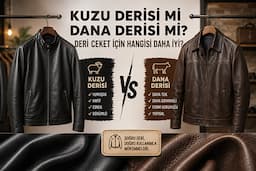
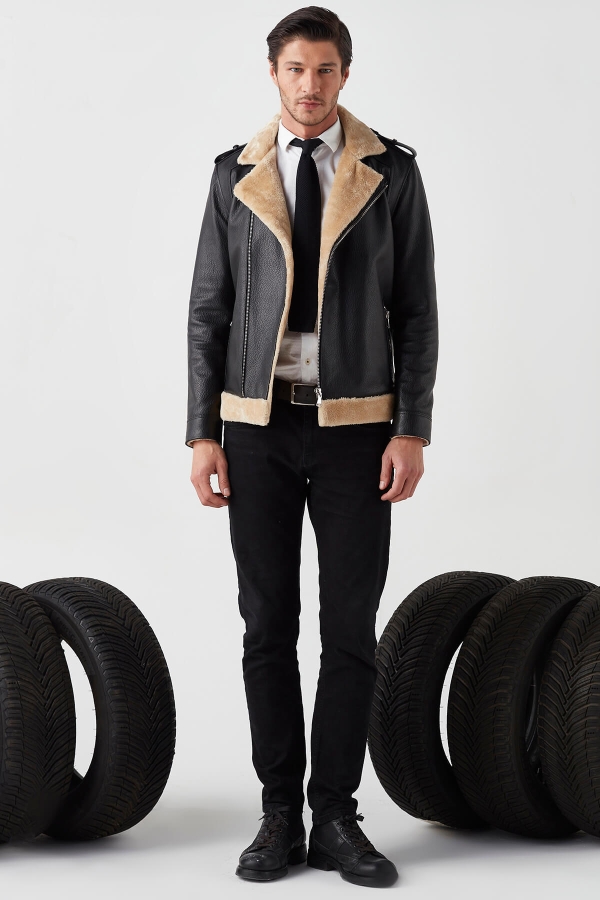
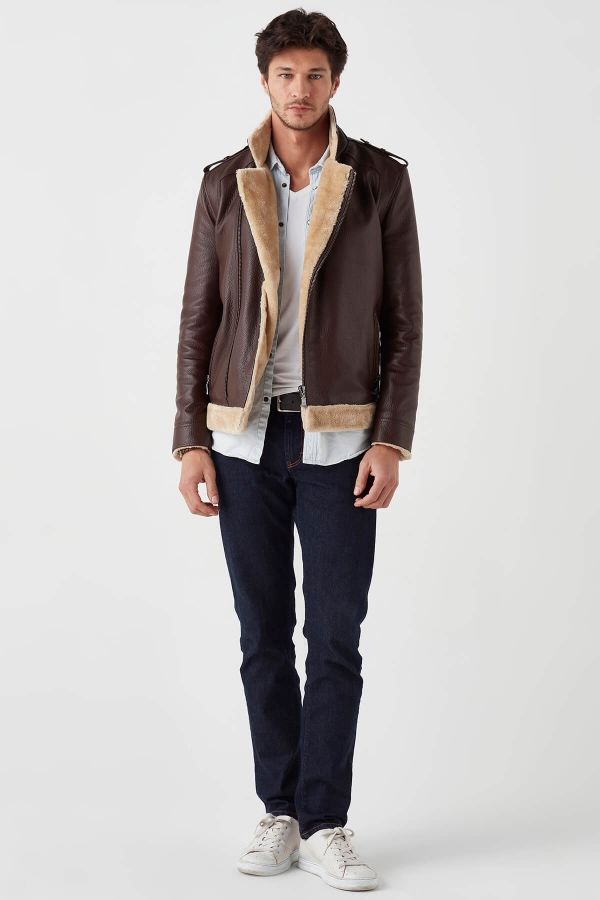
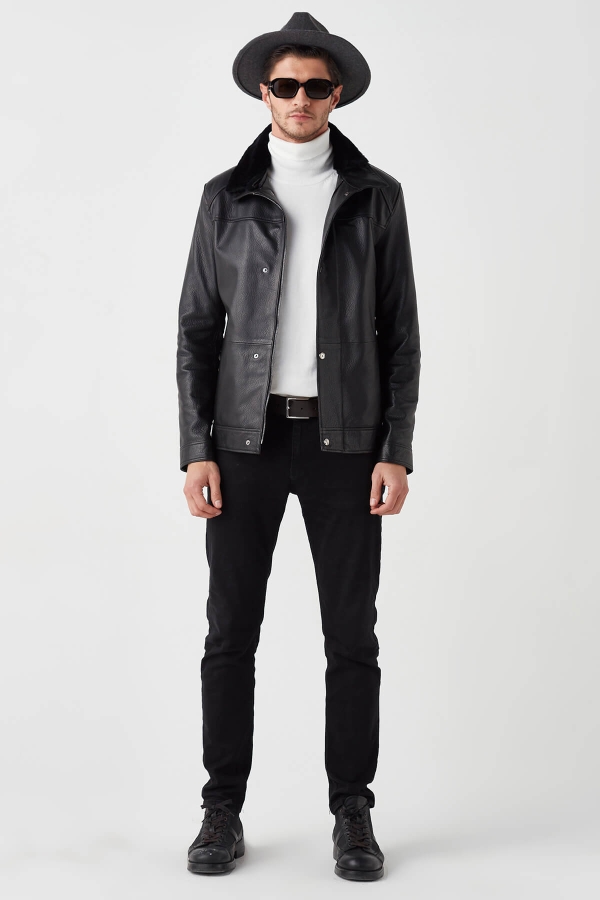
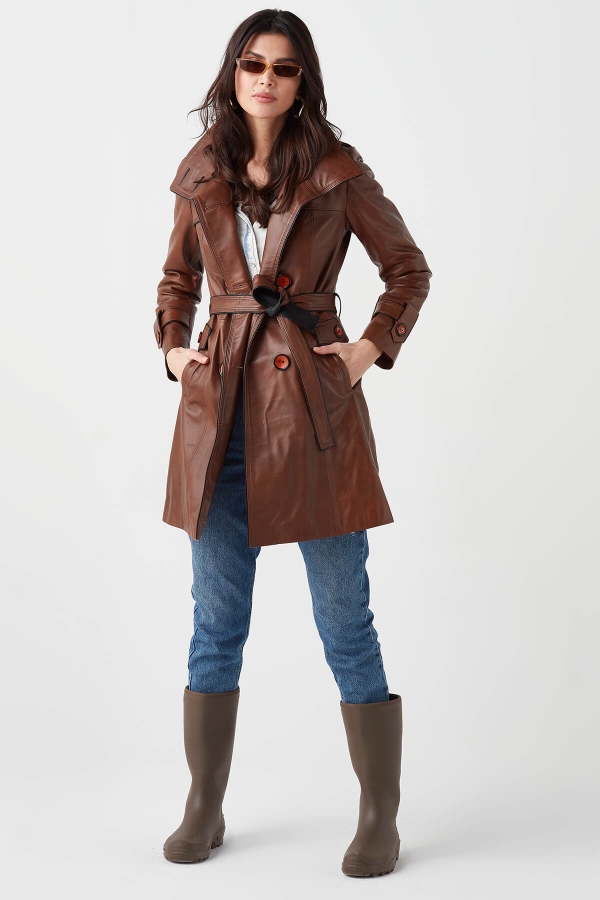
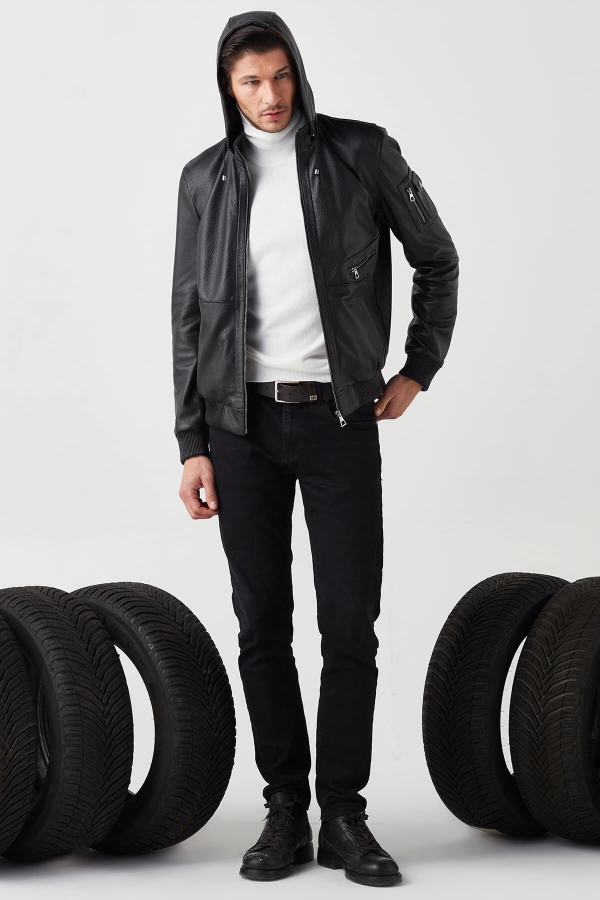
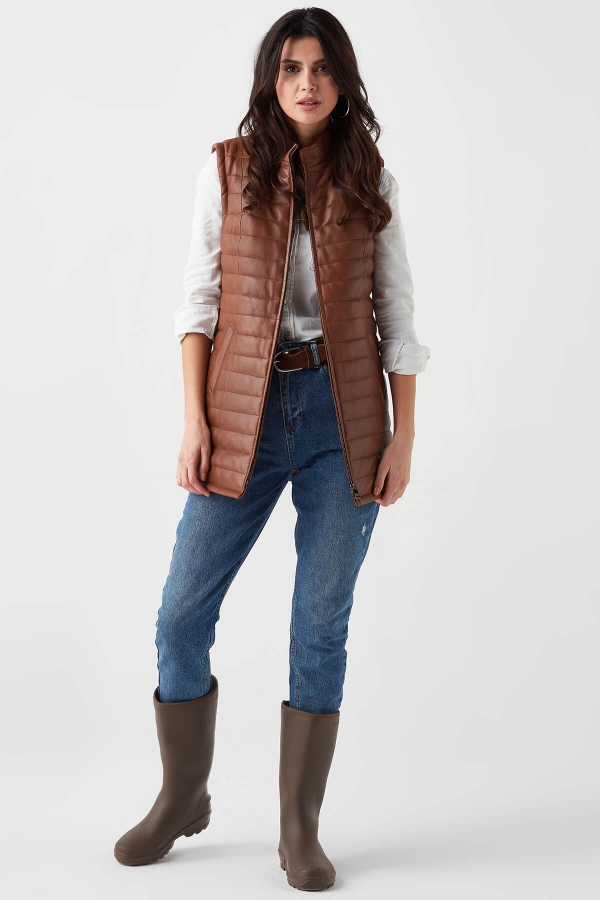
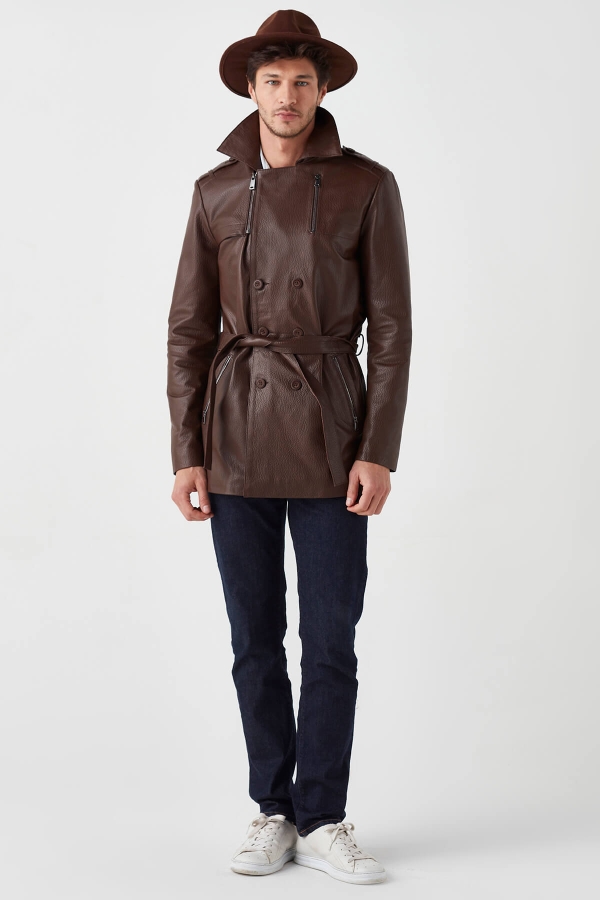
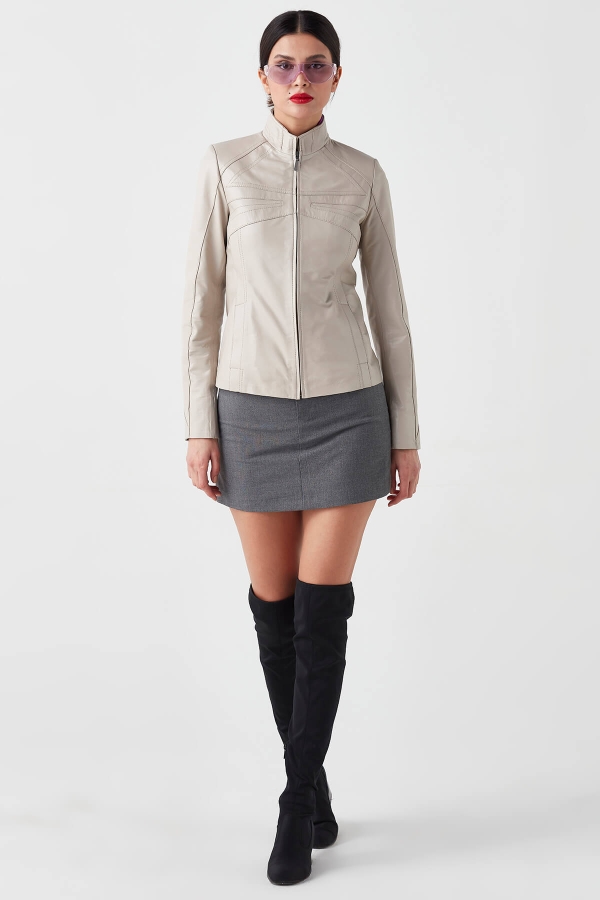
Lamb leather is one of the leather types that can offer a relatively lightweight, soft, supple and drapable character in leather apparel.
These characteristics can contribute to freedom of movement and a more fluid silhouette in products such as jackets, coats, trench coats and vests.
Leather apparel is not designed around maximum mechanical strength alone. The material's weight, handle, how it sits on the body and how it moves with the garment are also important.
For this reason, Deriza primarily uses genuine lamb leather in its leather apparel collections.
However, not all lamb leather is the same. Differences in thickness, fibre structure, tanning, fatliquoring and finishing can change the characteristics of the finished leather.
For a detailed comparison of lamb leather and cowhide, see Lamb Leather vs Cowhide: Which Is Better?
For leather apparel, explore the Leather Jackets and Leather Outerwear collections.
What Is Cowhide and Why Is It Used in Leather Goods?
Cowhide is a versatile leather type that can be given different levels of firmness, handle and surface character through tanning, thickness adjustment and finishing.
Depending on selection and processing, it can provide a firmer and more structured character than lamb leather. This can be advantageous in leather goods where form and certain mechanical characteristics are important.
Wallets and card holders are repeatedly opened and closed, carried in pockets and exposed to surface friction. In bags, depending on the design, shape retention, carrying loads, handles and attachment points can become important.
For this reason, leather selection for leather goods should consider not only softness, but also the physical properties that support the structure and use of the product.
Deriza uses genuine cowhide in many leather goods such as wallets, card holders and bags.
Explore the Leather Wallets and Leather Bags collections.
What Is Buffalo Leather and Why Is It Used for Belts?
Buffalo leather, depending on selection and processing, can have a firm, thick and structured character. These properties can make it suitable for products such as belts that are repeatedly subjected to pulling and bending.
However, it would not be accurate to say that buffalo leather is automatically more durable than every other leather simply because of the animal type. Belt performance also depends on leather thickness, fibre structure, tanning, edge finishing, buckle attachment and overall construction.
Deriza uses buffalo leather especially in sport belt styles. Cowhide may also be used in some classic and patent-look men's belts depending on the model.
Explore the Men's Leather Belts collection.
How Do Lamb Leather, Cowhide and Buffalo Leather Compare?
| Criterion | Lamb Leather | Cowhide | Buffalo Leather |
|---|---|---|---|
| General Handle | Can be relatively soft and fluid. | Can be firmer depending on processing. | Can have a firm and structured character. |
| Weight | Suitable for relatively lightweight leather apparel. | Varies according to thickness and product design. | Weight can increase in thicker structures. |
| Drape | Generally more fluid. | Depends on finishing and thickness. | Usually more suitable for structured applications. |
| Structured Use | Commonly used in apparel-focused applications. | Strong option for leather goods and some apparel. | Can be used in more structured products such as belts. |
| Main Use at Deriza | Leather apparel | Wallets, card holders, bags and some belts | Especially sport belts |
This comparison is not a quality ranking. Its purpose is to explain the general usage character of different leather types. Finished-product performance also depends on thickness, tanning, finishing, cutting and manufacturing quality.
What Do Leather Thickness and Softness Change?
Thicker leather is not always higher-quality leather. Likewise, softer leather does not automatically mean higher quality.
Thickness and hand feel should be evaluated according to the design and intended use of the product.
In leather apparel, excessively heavy or structured leather may reduce freedom of movement in some designs. In products with different mechanical requirements, such as belts, a firmer structure may be more appropriate.
The correct approach is not to look for “the thickest” or “the softest” leather, but the leather character that best suits the intended use.
What Do Full-Grain, Top-Grain and Corrected Grain Mean?
Terms such as full-grain, top-grain and corrected grain are frequently used in leather terminology. It can be misleading to treat them as a simple “good, better, best” ranking.
Full-Grain Leather
Full-grain refers to leather in which the natural grain surface has not been removed through corrective mechanical treatment. Its natural surface character may therefore remain more visible.
Top-Grain Leather
Top-grain refers to leather that includes the upper or grain side of the hide. Top-grain leather may retain its natural grain surface, or its surface may be sanded, corrected or finished depending on the intended use.
Corrected Grain Leather
Corrected grain refers to leather whose grain surface has been modified to a certain degree through sanding or similar mechanical processes and then given a new surface character through finishing.
None of these terms alone describes the overall quality of a finished leather product. Leather selection, tanning, finishing, intended use, pattern, cutting and workmanship must also be taken into account.
Are Natural Marks on Leather Defects?
Genuine leather is a natural material. Small tonal differences, variations in pore structure, natural wrinkles or some surface marks can therefore be present.
However, not every irregularity should automatically be described as a natural leather characteristic. How weaker or unsuitable areas are handled, how panels are positioned and the visual consistency of the finished product are all parts of manufacturing quality.
Likewise, a completely uniform surface does not automatically mean that the material is synthetic or low quality. Natural leather can be made more uniform through finishing.
It is therefore important to distinguish natural leather character from manufacturing defects.
What Determines Leather Durability?
Leather durability is not determined by one characteristic alone.
- Fibre structure and structural integrity
- Raw hide selection
- Leather type suited to the product
- Thickness
- Tanning and fatliquoring
- Finishing
- Cutting and panel placement
- Stitching and joins
- Edges and attachment points
- Conditions of use
- Care and storage
For this reason, seeing terms such as “genuine leather”, “lamb”, “cowhide”, “buffalo” or “full-grain” does not guarantee durability by itself.
How Can You Tell If Leather Is Genuine?
When distinguishing genuine leather from synthetic materials, it is not reliable to depend on only one sign such as smell, softness, pores or a water-drop test.
Material description and label, manufacturer information, surface and pore structure, hand feel and, where naturally visible without damaging the product, an edge or cross-section should be considered together.
For a detailed guide, see How to Tell If a Leather Jacket Is Genuine?
How Do You Choose the Right Leather for a Product?
The most useful question when selecting leather is not “Which leather is the best?” but “Which leather is more suitable for this product?”
- Leather jackets and outerwear: weight, softness, freedom of movement, drape and a hand feel suited to the design are important.
- Wallets and card holders: bending, folding, shape and product thickness may become more important.
- Bags: product form, carrying structure, handles, attachment points and the way the bag is used should be considered.
- Belts: pulling, bending, holes, buckle attachment and edge structure are important.
Using the same leather type for every product category is therefore neither necessary nor always ideal. The physical characteristics of the material, product design and real conditions of use should be evaluated together.
Does Leather Care Vary by Leather Type?
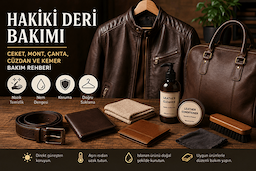
Yes. Natural leather can change over time because of use, friction, light, moisture and environmental conditions. However, care requirements depend not only on animal type, but also on the finish and how the product is used.
For this reason, the same cleaner, oil or conditioner should not automatically be applied to every leather product. Manufacturer guidance should be followed, and any care product should first be tested on a small, inconspicuous area.
Wet leather products should not be dried directly with high-heat sources such as radiators, heaters or hair dryers.
For detailed information, see How to Care for Genuine Leather
How Does Deriza Choose Leather?
Deriza's core approach is to match the leather type to the intended use of the product.
Genuine lamb leather is primarily used in leather apparel; genuine cowhide is used in many leather goods such as wallets, card holders and bags; and buffalo leather is used especially in sport belts.
Cowhide may also be used in some classic and patent-look men's belt styles depending on the model.
However, correct leather selection is only the beginning. Cutting, panel placement, stitching, lining, hardware, edge finishing and overall product construction all contribute to the character of the finished product.
What Should You Look for When Choosing a Leather Product?
Instead of looking only at product photos or the words “genuine leather”, it is more useful to evaluate the following information together:
- The type of leather used
- Whether the leather type suits the intended use
- Thickness, hand feel and surface character
- Finishing
- Cutting and stitching quality
- Attachment points and hardware
- Product measurements and fit
- Care requirements
- How clearly the manufacturer explains the material and technical details
For detailed leather apparel buying criteria, see What to Look for When Buying a Leather Jacket?
Frequently Asked Questions About Genuine Leather
What is the highest-quality leather?
There is no single leather type that is universally the “highest quality” for every product. Quality should be evaluated through raw hide characteristics, fibre structure, tanning, finishing, suitability for the intended use and manufacturing quality together.
Is lamb leather durable?
Lamb leather can provide the performance required for leather apparel. However, real durability does not depend only on leather type; fibre structure, thickness, tanning, finishing, product construction, conditions of use and care also matter.
Why is cowhide used for wallets?
Cowhide can be processed in different thicknesses, handles and surface characteristics, and can provide a structural character suitable for leather goods. For this reason, it is widely used in products such as wallets, card holders and bags.
Why is buffalo leather used for belts?
With appropriate selection and processing, buffalo leather can provide a firm and structured character. This can be suitable for the pulling and bending movements experienced by belts. However, belt performance also depends on thickness, buckle attachment, edge finishing and overall workmanship.
Is full-grain leather always the highest-quality leather?
Full-grain describes leather whose grain surface has not been removed through corrective mechanical treatment. This is an important material characteristic, but it does not determine the overall quality of the finished product by itself. Tanning, finishing, leather selection, intended use and manufacturing quality also need to be considered.
Are colour and texture variations normal in genuine leather?
Yes. Natural leather can show small tonal and texture variations. However, not every irregularity should automatically be treated as a natural characteristic; natural leather variation and manufacturing defects should be distinguished from one another.
Does genuine leather change with use?
Yes. The surface appearance and hand feel of leather can change over time because of use, friction, light, moisture and care conditions. The nature of this change depends on leather type, finishing and conditions of use.

.jpg&w=256&q=75)