
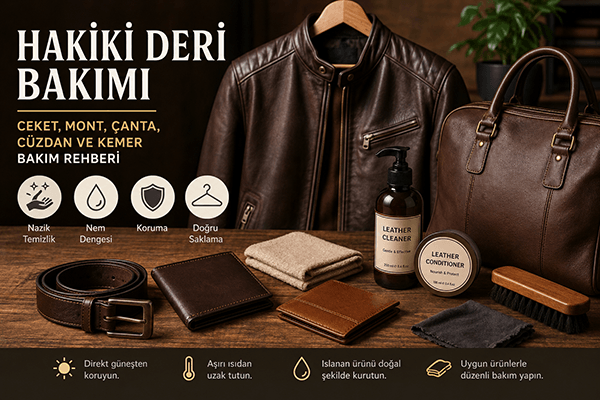
How to Care for Genuine Leather
Quick Answer: How Should Genuine Leather Be Cared For?
The basic approach to genuine leather care is to first identify the leather surface and finish, clean the product gently, use a care product suitable for that specific leather when necessary, allow wet leather to dry naturally without direct heat, and store the product under appropriate conditions.
Leather products should not be washed in a washing machine; they should not be dried with intense heat sources such as hair dryers, radiators or heaters; and they should not be cleaned with alcohol, cologne, bleach, strong solvents or random oils. Before using a cleaner or conditioner, check the manufacturer's care instructions and test the product on a small, inconspicuous area.
Genuine leather is a natural, fibrous material made suitable for use through tanning and other manufacturing processes. During use, it can be affected by friction, bending, moisture, rain, sunlight, body contact and environmental conditions.
For this reason, genuine leather care is not limited to removing dirt from the surface. Protecting the product from unnecessary chemical and mechanical stress, drying it correctly when wet, storing it in a way that helps preserve its shape and choosing the appropriate care method when necessary are all parts of proper leather care.
The most important rule is: not all genuine leather should be cleaned or cared for in the same way. Smooth finished leather, aniline leather, suede and nubuck may require different care methods.
First Step in Leather Care: Identify the Surface
| Leather / Surface | General Character | Basic Care Approach |
|---|---|---|
| Smooth Finished Leather | May have a protective surface finish. | Surface cleaning with a soft cloth; a suitable leather care product when necessary. |
| Aniline / Sensitive Surface | Natural surface characteristics may be more visible and the leather may be more sensitive to staining. | Minimal intervention; follow product instructions and always test first. |
| Suede / Nubuck | Velvety or napped surface. | Use brushes and care products designed specifically for these surfaces; do not use standard smooth-leather cream. |
Animal type, such as lamb, cowhide or buffalo, is important but does not determine the care method by itself. Two leathers obtained from the same animal type may require different care because of differences in tanning and finishing.
For more detailed information about genuine leather types and surface characteristics, see Leather Guide: Genuine Leather Types and Characteristics.
Leather Engineer's Note
When caring for leather, it is not enough to rely only on labels such as “lamb”, “cowhide” or “genuine leather”. The tanning, fatliquoring, dyeing, finishing and surface characteristics of the finished leather all play an important role in how it should be cared for.
Before using any care product, checking the product's care instructions and confirming which leather surfaces the care product is designed for is the safest approach.
What Should You Never Do to Genuine Leather?
- Do not wash it in a washing machine: Water, detergent, temperature and mechanical movement can adversely affect the leather surface, handle and product shape.
- Do not dry it with direct high heat: Radiators, heaters and hair dryers can cause rapid and uneven drying.
- Do not use alcohol, cologne, bleach or strong solvents: These products may cause colour and surface changes on some finishes.
- Do not apply cooking oil, baby oil or random oils: Unsuitable products may cause darkening, stains, surface changes or stickiness.
- Do not apply an iron directly to leather: High temperatures can permanently alter the surface and finish.
- Do not rub stains aggressively: Rubbing may spread the stain or alter the surface colour and texture.
- Do not store leather in a sealed plastic bag for long periods: Choose dry storage conditions that allow the product to retain its shape and provide appropriate air circulation.
- Do not apply a care product directly to a large area: Test it first on a small, inconspicuous area.
How to Clean Genuine Leather
For routine or light surface cleaning, the first step is to remove dust with a clean, soft and non-colour-transferring cloth.
If more extensive cleaning is required, do not use random detergents or cleaners without knowing the leather surface and finish.
On some smooth finished leathers, a slightly damp cloth may be used if permitted by the manufacturer. However, this method should not automatically be used on suede, nubuck, aniline or other water-sensitive special finishes.
If a cleaner is to be used:
- Check the product care label or manufacturer's instructions first.
- Make sure the cleaner is suitable for the specific leather surface.
- Test it on a small, inconspicuous area.
- If there is no colour or surface change, apply a small amount carefully.
- Use gentle movements rather than aggressive rubbing.
How to Care for a Leather Jacket
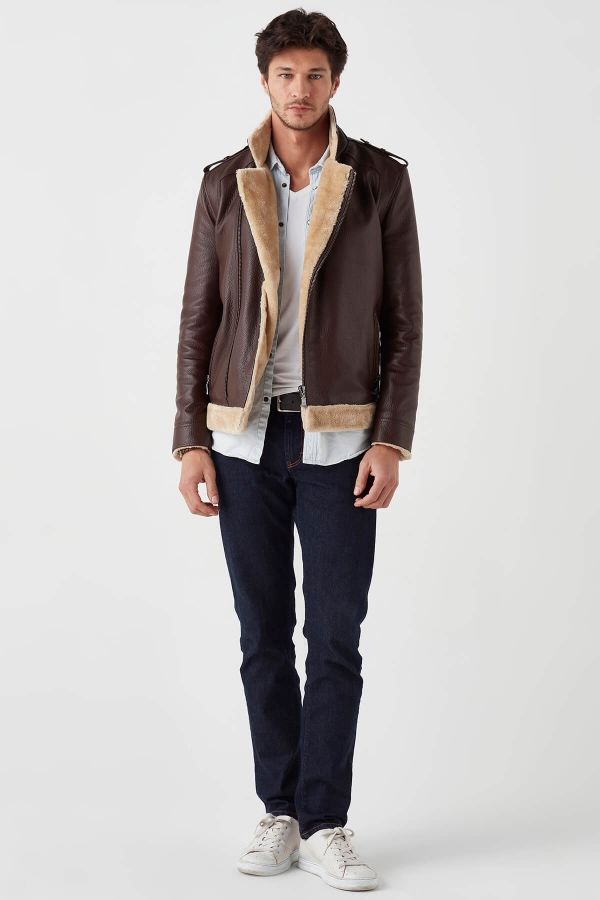
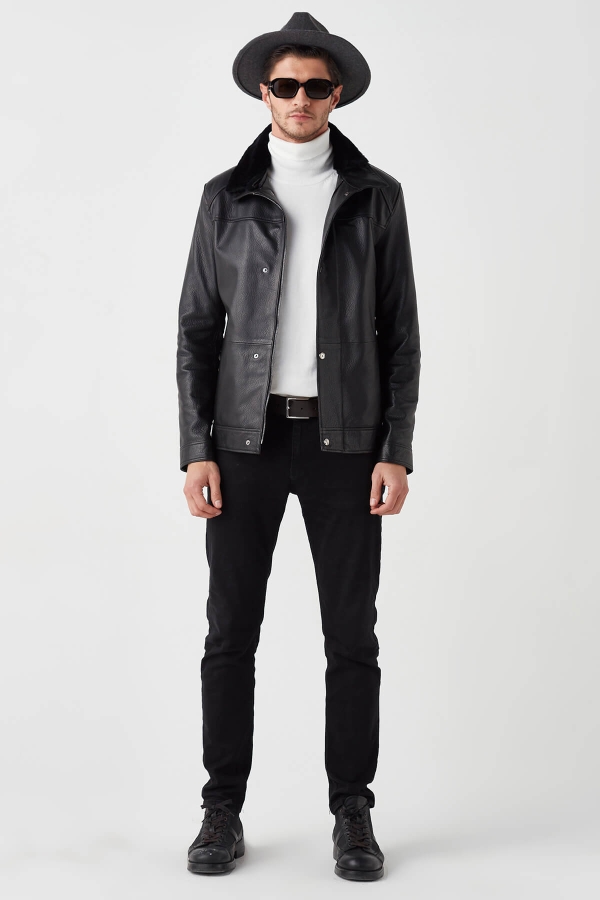
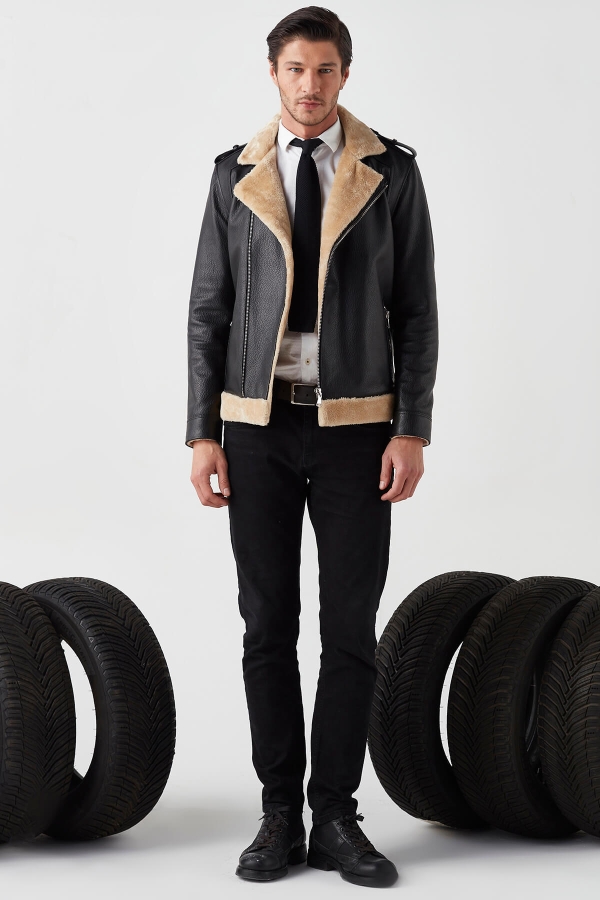
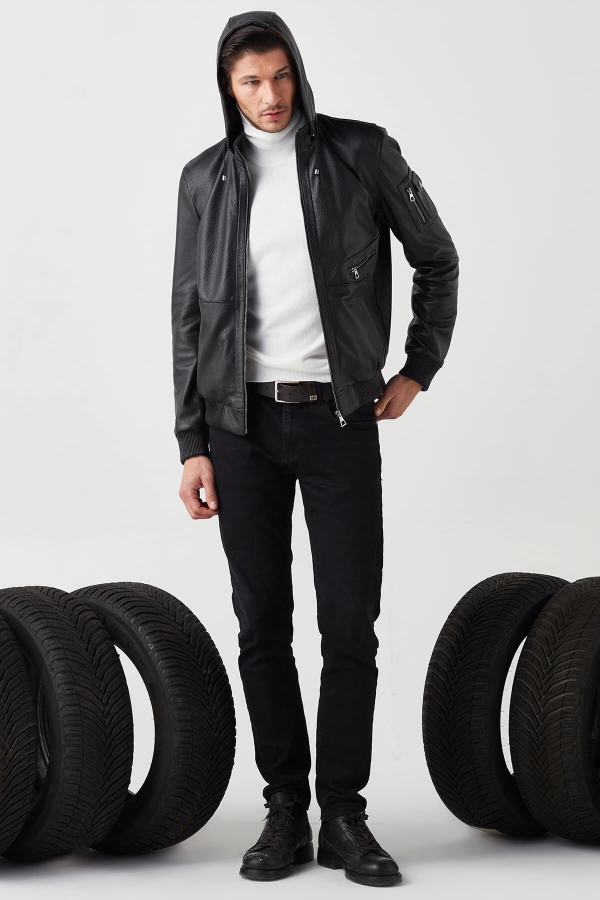
A leather jacket is exposed to body contact, friction, arm and elbow movement, weather conditions and everyday wear.
After use, it can be aired briefly when necessary, surface dust can be removed with a soft cloth, and the jacket can be stored on a suitable hanger that supports the shape of the shoulders.
Especially with relatively soft leather apparel such as lamb leather, avoid aggressive rubbing, excessive wetting and applying more care product than necessary.
For significant stains or surface changes, repeatedly experimenting with different chemicals at home may cause further damage. Professional cleaning by a leather specialist may be the safer option.
How to Care for a Leather Coat or Outerwear
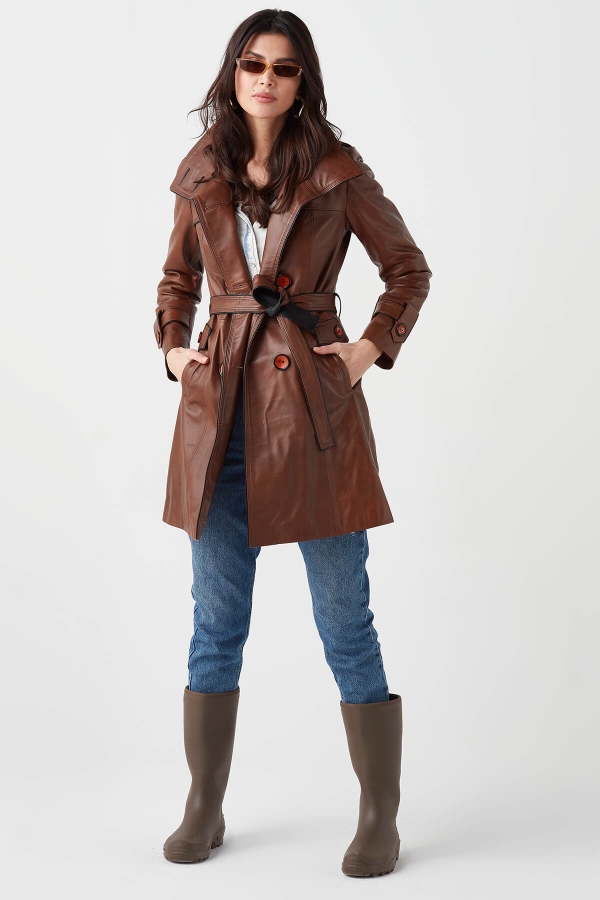
Leather outerwear may be exposed to more rain, moisture and temperature changes, particularly during autumn and winter.
If the garment becomes wet, do not squeeze or wring it. Blot excess water gently with a clean, soft cloth and allow the garment to dry naturally at room temperature.
Once it is completely dry, if the surface feels unusually dry or stiff, whether a care product should be used must be evaluated according to the leather, finish and product care instructions.
How to Dry a Wet Leather Jacket or Coat
- Do not squeeze or wring the garment.
- Blot excess surface water with a clean, soft cloth.
- Place the jacket or coat on a wide hanger that supports its shape.
- Keep it away from direct sunlight.
- Do not use radiators, heaters or hair dryers.
- Allow it to dry naturally at room temperature with normal air circulation.
- Inspect the surface once it is completely dry.
- If conditioning is needed, use only a product suitable for that leather and apply it carefully.
Genuine leather should not be considered completely waterproof. The effect of water can vary according to the leather type, finish, duration of exposure and amount of water.
How to Care for a Leather Bag
When caring for a leather bag, the exterior surface is not the only consideration; the bag's shape, handles, stitching and attachment points are also important.
- Avoid overloading the bag beyond its intended capacity.
- Remove surface dust with a clean, soft cloth.
- If it will not be used for a long period, support its shape with clean, soft filling material.
- Do not leave heavy objects inside the bag for extended periods.
- Avoid excessive loads on handles and attachment points.
- Test any care product on an inconspicuous area first.
How to Care for a Leather Wallet
A leather wallet is regularly exposed to hands, pockets and bags, making it susceptible to friction, dirt and changes in shape.
Overfilling a wallet with cards, cash or other objects can place unnecessary stress on the leather, card slots and stitching.
- Empty the wallet periodically.
- Gently remove dust from the internal compartments.
- Do not rub the surface aggressively.
- Do not wipe it with cologne or alcohol-based products.
- If it becomes wet, do not dry it with direct heat.
How to Care for a Leather Belt
A leather belt is exposed to repeated bending and pulling during use. The buckle attachment and frequently used holes are areas where mechanical stress is concentrated.
When removing the belt, do not pull it forcefully through the buckle or holes, and do not store it in an enclosed space while wet or damp.
For long-term storage, rather than folding the belt into a tight or sharp bend, store it on a suitable hanger or in a loose form that does not strain its structure.
Explore Deriza belt models in the Men's Leather Belts collection.
How to Clean Suede and Nubuck Leather
Suede and nubuck have different surface structures from smooth finished leather. For this reason, standard leather creams, oils or cleaners designed for smooth leather should not be used on these surfaces.
For light dust and some dry dirt, a clean brush designed for suede or nubuck can be used. However, because the correct cleaning method depends on the type of stain and finish, the product's care instructions should be followed.
For oil stains, significant water marks, colour changes or extensive soiling, professional leather cleaning may be safer.
How to Use Leather Conditioner or Cream
Leather conditioner is not mandatory or suitable for every leather product. Especially on suede, nubuck, aniline or specially finished surfaces, the wrong care product may cause permanent changes in colour or surface appearance.
If a care product is to be used:
- Check that it is suitable for the leather and surface type.
- Remove dust from the leather surface.
- Test the care product on a small, inconspicuous area.
- If suitable, apply a small amount.
- Follow the care-product manufacturer's application and waiting instructions.
- If necessary, remove excess product with a clean, soft cloth.
Using more conditioner does not mean better leather care. Excess product may cause darkening, changes in shine or changes in the surface handle of some leathers.
How Often Should Genuine Leather Be Conditioned?
There is no fixed care schedule that applies to every genuine leather product.
Care requirements may vary according to the leather and finish, frequency of use, climate, humidity, friction and storage conditions.
Instead of following universal rules such as “apply cream every month” or “condition twice a year”, the actual condition of the product and the manufacturer's care instructions should be the primary guide.
How Should Leather Products Be Stored?
- Store the product clean and completely dry.
- Keep jackets and coats on wide, sturdy hangers that support the shoulder shape.
- Instead of leaving bags empty and crushed for long periods, support their shape with clean, soft filling material.
- Avoid direct sunlight, high temperatures and excessively humid environments.
- For long-term storage, do not compress the product or place heavy items on top of it.
- For apparel and bags, when appropriate, use suitable fabric covers that allow air circulation.
Common Genuine Leather Care Mistakes
| Mistake | Better Approach |
|---|---|
| Washing in a washing machine | Use a cleaning method suitable for the leather and finish |
| Drying with a radiator or hair dryer | Allow the leather to dry naturally at room temperature |
| Wiping with cologne or alcohol | Use a cleaning method suitable for the surface |
| Applying cooking oil or random oils | If necessary, use a care product suitable for that leather surface |
| Applying too much leather cream | Use a small amount in a controlled manner |
| Using standard leather cream on suede or nubuck | Use only methods and products designed for suede or nubuck |
| Aggressively rubbing a stain | Treat it carefully without spreading it; seek professional help when necessary |
What Should You Do If a Leather Product Is Stained or Damaged?
There is no single household cleaning method that is safe for every type of stain. Especially with oil, ink, significant water marks, dye transfer, mould, colour loss, deep scratches or extensive surface damage, using random cleaning products may make the problem worse.
In these situations:
- Do not rub the stain aggressively.
- Do not apply different chemicals one after another.
- Try to identify the leather and finish.
- Check the product's care instructions.
- When necessary, consult a professional specialising in leather cleaning or repair.
Quick Leather Care Checklist
- Do I know what type of leather surface I am dealing with?
- Have I checked the product's care label?
- Have I tried gentle, dry cleaning first?
- Is the product I intend to use suitable for this leather surface?
- Have I tested it on an inconspicuous area?
- Am I making the leather unnecessarily wet?
- Am I using direct high heat?
- Am I storing the product completely dry?
- Am I preserving the product's shape during storage?
- Does a serious stain or damage require professional attention?
Frequently Asked Questions About Genuine Leather Care
What should I do if genuine leather gets wet in the rain?
Blot excess surface water with a clean, soft cloth and allow the product to dry naturally at room temperature without using a radiator, heater or hair dryer.
How often should a leather jacket be conditioned?
There is no fixed interval that applies to all leather jackets. Care requirements vary according to the leather and finish, frequency of use, climate and the current condition of the product. Follow the product's care instructions.
Can a leather jacket be washed in a washing machine?
As a general rule, genuine leather jackets should not be washed in a washing machine. Water, detergent and mechanical movement can alter the leather surface, handle and shape of the jacket.
Can a leather wallet be cleaned with water?
Intensive cleaning with water is not recommended without knowing the leather and finish. On some smooth finished surfaces, a slightly damp cloth may be used if permitted by the manufacturer, but this does not apply to all leather types.
Why can leather crack?
Cracking or surface deterioration can be associated with several factors, including prolonged use, repeated bending, excessive dryness and heat, incorrect cleaning, unsuitable care, ageing of the finish or inappropriate storage conditions.
Can olive oil or petroleum jelly be used to care for leather?
Using olive oil, cooking oil, baby oil, petroleum jelly or similar household products without knowing the leather and finish is not recommended. These substances may cause darkening, staining, stickiness or changes to the finish on some surfaces.
Can leather cream be used on suede and nubuck?
Standard care creams designed for smooth leather should not be used on suede or nubuck. Use brushes and care products specifically designed for these surfaces and follow the manufacturer's instructions.
What is the most important rule of leather care?
The most important rule is not to use random cleaning or care products without knowing the leather and its surface finish. Gentle cleaning, controlled care, natural drying and correct storage should be considered together.
Explore Deriza Leather Products
Explore the relevant Deriza collections according to the type of leather product:
- Men's Leather Jackets
- Women's Leather Jackets
- Leather Outerwear
- Leather Bags
- Leather Wallets
- Men's Leather Belts
Conclusion: Proper Leather Care Is Not a One-Size-Fits-All Formula
The purpose of genuine leather care is not to apply as much cream, oil or cleaner as possible, but to intervene only when necessary and with the correct method.
Identifying the leather and finish, cleaning the surface gently, avoiding random chemicals, allowing wet leather to dry naturally, storing the product correctly and seeking professional help when necessary are the foundations of proper leather care.
Because leather is a natural and variable material, the safest care method is one determined according to the product's own surface characteristics and the manufacturer's care instructions.



.jpg&w=256&q=75)