Lamb Leather vs Cowhide: Which Is Better?
Quick Answer: Is Lamb Leather or Cowhide Better?
There is no universally “better” choice between lamb leather and cowhide. In leather apparel, lamb leather can generally offer a relatively lightweight, soft, supple and drapable character. Cowhide, depending on its selection, thickness and processing, can have a firmer and more structured character. The right choice for a leather jacket should be based not only on the animal type, but also on thickness, tanning, finishing, garment construction and intended use.
Lamb leather or cowhide? is one of the most common material comparisons when buying a genuine leather jacket. However, evaluating the question only in terms of “which one is more durable?” is incomplete.
The performance of leather in a finished product is influenced not only by animal type, but also by raw hide characteristics, fibre structure, the area of the hide, thickness, tanning, fatliquoring, finishing, cutting and garment construction.
A more useful question is therefore not “Is lamb leather or cowhide higher quality?” but “Which leather character is more suitable for this product and its intended use?”
What Is the Main Difference Between Lamb Leather and Cowhide?
Both leather types can be used in high-quality genuine leather products when properly selected and processed. Their general physical characteristics, however, can differ.
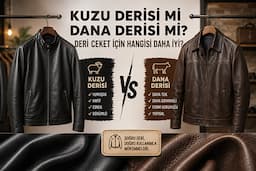
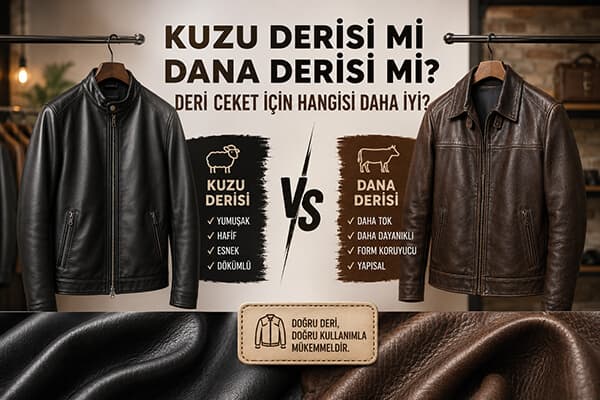
Lamb leather can generally provide a relatively lightweight, soft and supple character in leather apparel. These properties can help a jacket drape more naturally on the body and feel comfortable during movement.
Cowhide, depending on selection, thickness and processing, can offer a firmer and more structured character. It may therefore be preferred in some products where a more defined shape or particular mechanical performance is required.
Deriza primarily uses genuine lamb leather in its leather apparel collections. Cowhide is used according to product requirements in many leather goods such as wallets, card holders and bags.
Lamb Leather vs Cowhide Comparison
| Feature | Lamb Leather | Cowhide |
|---|---|---|
| Softness | Can generally provide a relatively softer character in leather apparel. | Can be firmer and more structured depending on processing. |
| Flexibility and Drape | Can suit more fluid garments where freedom of movement is important. | Varies with thickness and finishing and can provide a more defined shape. |
| Mechanical Performance | With appropriate leather selection and construction, it can provide the performance required for leather apparel. | Appropriately selected thicker structures can provide high resistance to certain mechanical stresses. |
| Weight | Can be suitable for producing relatively lightweight garments under comparable conditions. | Product weight can increase with thicker and more structured constructions. |
| Silhouette | Can provide a softer and more fluid silhouette. | Can provide a firmer and more defined form. |
| Common Uses | Jackets, coats, vests and other leather apparel | Bags, wallets, card holders and other leather goods, as well as some leather apparel |
This comparison describes general tendencies. Even two leathers from the same animal group can have significantly different characteristics because of raw hide selection, fibre structure, thickness, tanning, fatliquoring and finishing.
Therefore, leather type alone is not a quality grade.
What Are the Characteristics of Lamb Leather?
In leather apparel, lamb leather can stand out for characteristics such as relatively low weight, a soft hand feel, suppleness and drape.
These characteristics can help the jacket move more comfortably with the body and create a more fluid silhouette.
Finishes such as napa can create a smooth and clean surface appearance on lamb leather. However, napa is not a quality grade on its own. The quality of finished leather should also be evaluated through raw hide characteristics, fibre structure, tanning, fatliquoring and finishing.
Advantages of Lamb Leather for Jackets
- Can provide a relatively lightweight wearing experience.
- Is suitable for soft and supple garment characteristics.
- Can be advantageous in jackets where freedom of movement is important.
- Can create a softer and more fluid silhouette.
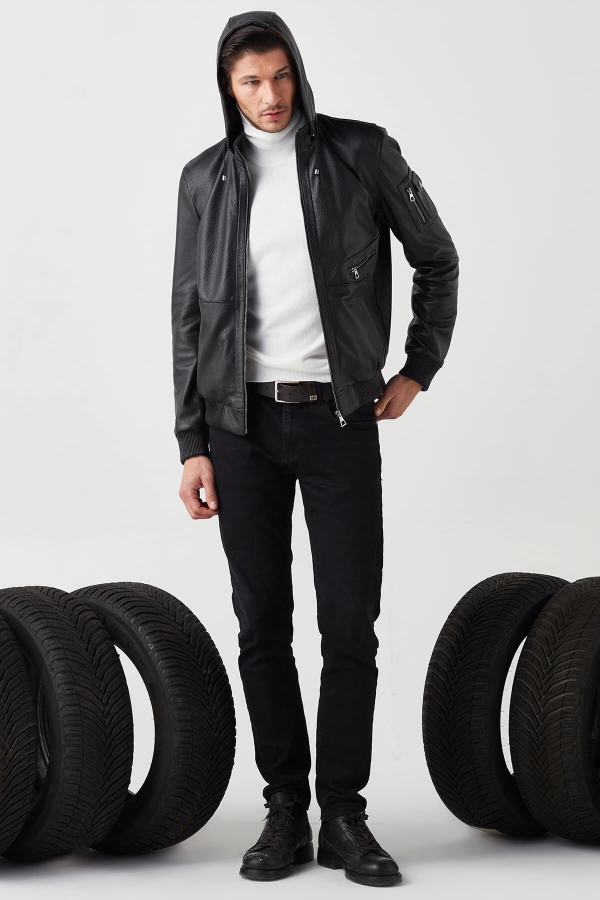
- Can be used in blazer, classic, bomber and other fashion-focused leather jacket designs.
What Are the Characteristics of Cowhide?
Cowhide, depending on selection and processing, can provide a firmer, more structured and fuller character.
Particularly when fibre structure, thickness and finishing are appropriate, it can be a strong material option for products exposed to abrasion, bending or other mechanical stresses.
For this reason, cowhide is widely used in bags, wallets, card holders and other leather goods, while it can also be used in some leather jackets where a more structured character is desired.
Advantages of Cowhide
- Can provide a firmer and more structured product character.
- Appropriately selected and thicker leathers can offer high mechanical resistance.
- Can be advantageous where a more defined shape is required.
- Offers a wide range of applications through different thicknesses and finishes.
Leather Engineer's Note
Describing leather simply as “lamb” or “cowhide” is not enough to determine the quality of the finished product.
Raw hide selection, fibre structure, hide area, thickness, tanning system, fatliquoring, finishing and product construction work together to determine the performance of the finished material.
For this reason, Deriza does not evaluate material through questions such as “which leather is more expensive?” or “which leather is always more durable?”, but rather by asking which leather character is most suitable for the intended use of the product.
Lamb Leather or Cowhide for a Leather Jacket?
The best leather for a leather jacket depends on the design and intended use.
If relatively low weight, softness, freedom of movement and a more fluid silhouette are priorities for everyday wear, good-quality lamb leather can be a strong choice.
If a firmer, more structured jacket or specific mechanical characteristics are required, cowhide with suitable properties can also be considered.
In this context, “best” cannot be defined by maximum mechanical strength alone. A leather jacket is a garment, so weight, comfort, hand feel, drape, fit and freedom of movement are also important aspects of product performance.
Is Lamb Leather or Cowhide More Durable?
This question cannot be answered reliably by looking only at animal type.
Some appropriately selected, thicker cowhides can provide greater resistance to particular mechanical stresses. However, this does not mean that every cowhide is more durable than every lamb leather.
Real-world durability is influenced by fibre structure, leather thickness, tanning, fatliquoring, finishing, cutting, stitching, conditions of use and care.
In leather apparel, maximum mechanical resistance is not the only goal. Leather that is excessively heavy or structured for a particular design may reduce comfort and freedom of movement.
Who Is a Lamb Leather Jacket Suitable For?
A lamb leather jacket may be suitable if you value:
- a relatively lightweight leather jacket,
- a soft and supple leather character,
- freedom of movement for everyday city use,
- a softer, more fluid silhouette,
- classic, blazer, bomber or modern cuts.
Explore different Deriza styles in the Men's Leather Jackets and Women's Leather Jackets categories.
When Can Cowhide Be a Better Choice?
Cowhide can be advantageous in products where a firmer structure, more defined form or particular mechanical performance is important.
Leather goods such as bags, wallets and card holders can be exposed to repeated bending, abrasion, load carrying and other mechanical influences. The leather characteristics expected from these products are not necessarily the same as those required from a lightweight jacket worn on the body.
Why Does Deriza Use Lamb Leather for Leather Apparel?
Deriza primarily uses genuine lamb leather in its leather apparel collections because its characteristics are compatible with the relatively low weight, softness, freedom of movement and drape expected from leather garments.
In jackets, coats and vests, mechanical durability alone is not sufficient. The material must also provide a weight, hand feel and movement character appropriate for the design of the garment.
Explore the Deriza Leather Apparel collection.
Lamb Leather or Cowhide for a Leather Vest?
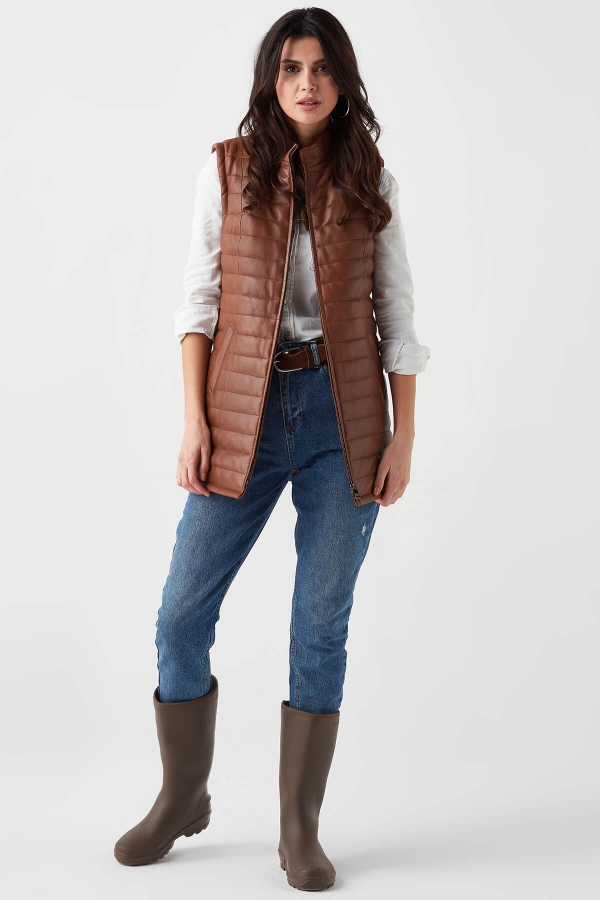
The same selection logic also applies to leather vests. In designs where lightness and freedom of movement are important, lamb leather can be a suitable option.
Leather type should still be considered together with the cut of the garment, leather thickness, lining and total product construction.
Explore the Men's Leather Vests and Women's Leather Vests collections.
What Should You Consider When Choosing Between Lamb Leather and Cowhide?
A buying decision should not be based only on the leather type printed on the product label. Consider the following factors together:
- Leather type and intended use
- Raw hide characteristics
- Fibre structure
- Thickness
- Total garment weight
- Softness, hand feel and flexibility
- Tanning and finishing
- Cutting and garment workmanship
- Lining and hardware
- Care requirements
Especially when choosing a leather jacket, leather type + leather characteristics + fit + workmanship + intended use should be evaluated together.
For more detailed buying criteria, read What to Look for When Buying a Leather Jacket?
Frequently Asked Questions
Is lamb leather or cowhide higher quality?
Leather type alone does not determine quality. Raw hide characteristics, fibre structure, thickness, tanning, fatliquoring, finishing and garment workmanship all contribute to final quality. Both lamb leather and cowhide can be used in high-quality products when properly selected and processed.
Is lamb leather or cowhide more durable?
Some appropriately selected, thicker cowhides can provide greater resistance to particular mechanical stresses. However, durability does not depend only on animal type; fibre structure, thickness, processing, construction, conditions of use and care also matter.
Is lamb leather good for leather jackets?
Yes. Its relatively lightweight, soft and supple character makes lamb leather a strong material option for leather jackets where everyday comfort and freedom of movement are important.
Is a lamb leather jacket heavy?
Lamb leather can be suitable for producing relatively lightweight leather garments. However, the actual total weight of a jacket depends on leather thickness, garment size, design, lining, insulation and the amount of hardware used.
Can leather jackets be made from cowhide?
Yes. Cowhide can be used to make leather jackets and may be suitable for some designs where a firmer or more structured character is desired.
What type of leather does Deriza use for leather jackets?
Deriza primarily uses genuine lamb leather in its leather apparel collections. This choice is compatible with the lightness, softness, freedom of movement and drape expected from leather garments.
Conclusion: Lamb Leather or Cowhide?
There is no single winner between lamb leather and cowhide for every product and user.
If relatively low weight, softness, suppleness and drape are priorities in leather apparel, lamb leather can be a suitable choice; if a firmer, more structured character or particular mechanical performance is required, cowhide with the appropriate properties can be considered.
However, generalisations such as “cowhide is always more durable” or “lamb leather is always higher quality because it is softer” are not technically sufficient.
The right choice should be based on how well the leather type, fibre structure, thickness, processing, product construction and actual intended use work together.


.jpg&w=256&q=75)